NEW YORK, March 18 – I apologize to my readers about the infrequent blog posts in the last several months. I’ve been dealing with a lot of life changes. I’ve also decided to move the blog over to a private server due to the increasingly prohibitive restrictions of blogger and the personal desire to expand the content on the site. Over the next several months, I will be transitioning slowly over to my own domain name (www.raiwebs.com). Hopefully by July, the entire blog will be fully transferred over to the private hosting server.


Showing posts with label art. Show all posts
Showing posts with label art. Show all posts
Friday, March 18, 2011


Tuesday, November 23, 2010
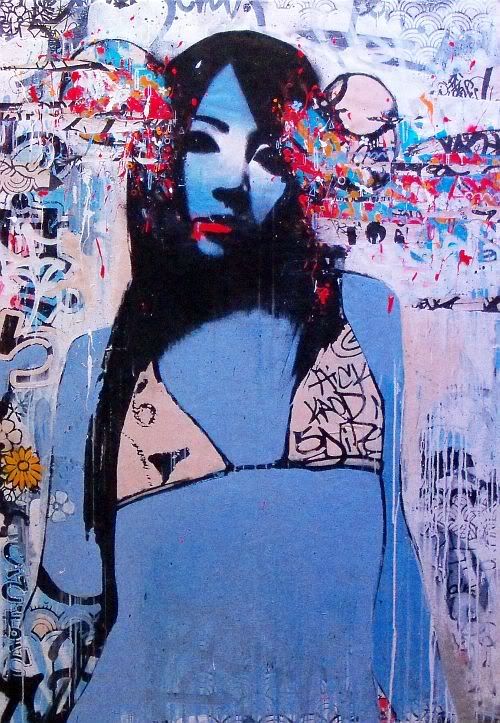
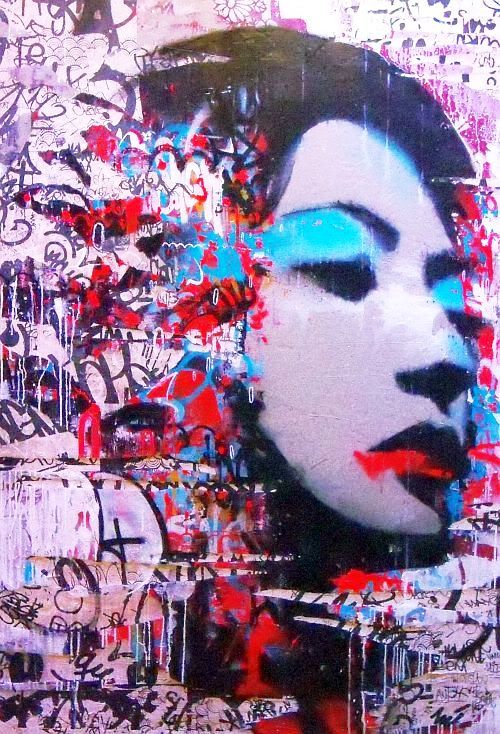
HUSH is Found
American Dreamer
NEW YORK, November 19 – The Angel Orensanz Foundation hosted a brief gallery exhibition for British street artist HUSH. The current series of paintings is titled “Found”. In the past, the artist has been known to combine elements of graffiti art, anime, manga, and Asian pop culture.
Found in the City
Wednesday, October 27, 2010
Shonen Knife at Asia Society
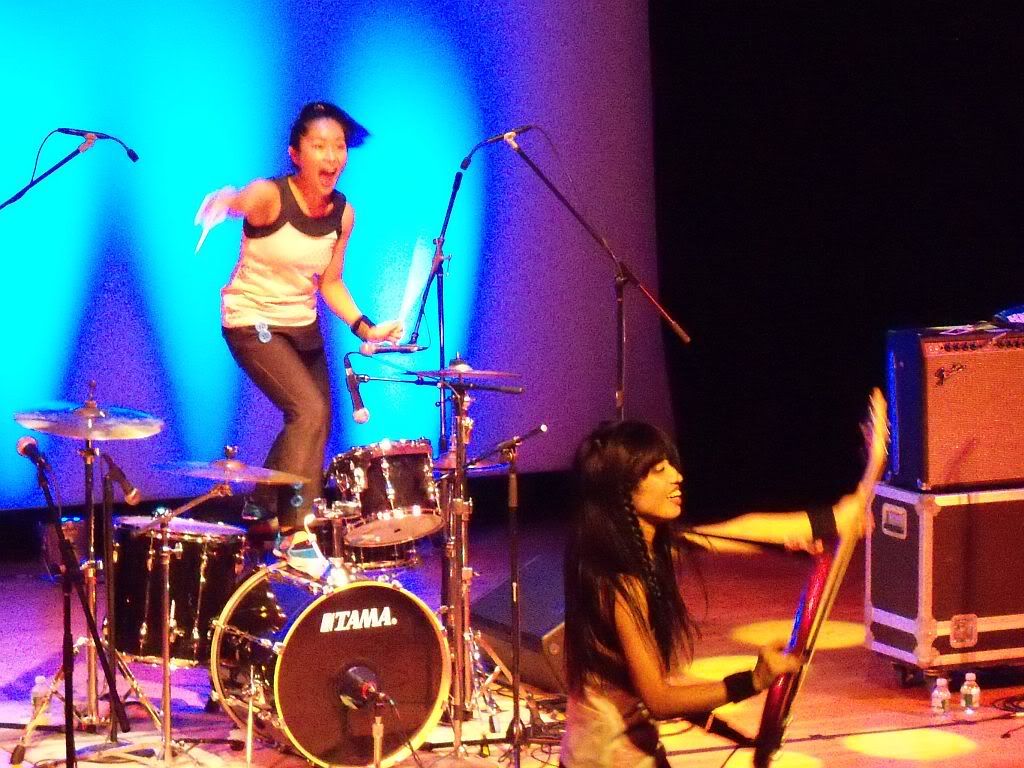
Emi Morimoto standing on her drums and Ritsuko Taneda rocking out.
New York, September 25 – As a part of their extravagant Yoshitomo Nara (奈良 美智) exhibition, Asia Society hosted a concert by Shonen Knife (少年ナイフ). Nara is a big fan of the band and designed some of their album covers including Happy Hour. In a larger sense, he has also credited punk music as being a major influence in his artwork.
In addition to the art exhibit, the performance was part of a new American tour that served as a coming out party for Shonen Knife's new drummer Emi Morimoto. She seemed to fit the band extremely well. Her drumming was exciting and filled with gusto.
Thursday, October 21, 2010
NYCC 2010: Everyday is Like GR Sunday

Giant Robot Invades
New York, October 10 – The last day at New York Comic Con was much calmer, and I saw more children in the crowd. My game plan for most of the day was booth duty. I spent most of the day answering questions and promoting Giant Robot Magazine.
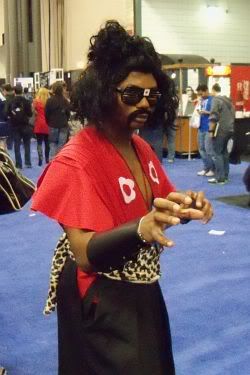 Sho'nuff visits the Giant Robot Booth |
The booth had many different visitors. Most of the visitors to our booth were young artists looking to get involved with Giant Robot. I had long running conversations about Superflat, street graffiti, and the current art scene. I even ran into a few David Choe fans. They were hoping that Dave was going to be at the booth. Unfortunately I had to give them the bad news. On the other hand, younger booth visitors were looking for recommendation about everything. I was dispensing recommendations for anime, manga, Asian cinema, J-rock, and other related topics.
Wednesday, September 15, 2010
Farewell to Giant Robot New York with Goh Nakamura
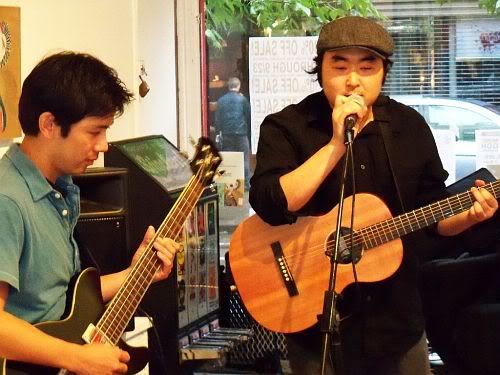
Right to Left: Goh Nakamura and Gary Wang
New York, September 12 – Devoted Giant Robot fans braved the harsh rain to attend a farewell event at the Giant Robot New York store. The store is scheduled to close on September 23. The farewell event began with a signing by David Choe and ended with a set by Goh Nakamura.
I rushed over to the East Village to attend the double headliner event. The delayed subway trains and the heavy rain slowed my progress. So, I arrived pretty late. I walked into the small store front and encountered Goh’s acoustic guitar. Neither Dave nor Goh were present. I overheard people saying that they went to some barbecue joint down the block. I probably just missed them and decided to hang out.
Monday, August 30, 2010
Stealing Glimpses of Nara
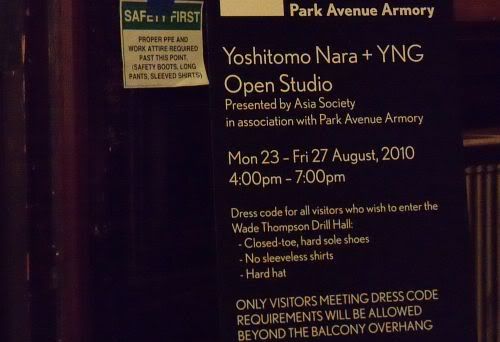
The Rule: No Shirt, No Shoes, No Nara.
New York, August 25 – Yoshitomo Nara (奈良 美智) held a five day open studio for the reconstruction of his large-scale installation Home. It was a jointly sponsored event by the Park Avenue Armory and the Asia Society Museum. The reconstruction site was located at the Wade Thompson Drill Hall of the Park Avenue Armory.
The armory was being heavily renovated, and the guests had to have to follow strict rules. The first requirement was a dress code. Everyone had to wear closed toe shoes and sleeved shirts. The construction site also issued hard hats to guests, and they had to be worn. This is clearly a safety guideline. The second rule was no photography. No photography?

Guests with Hard Hats.
When I saw the “no photography” sign at the entrance of the drill hall, I asked one of the staffers about it. He said, “There is no photography inside.” For the sake of clarification, I also asked about the photography policy in the outer foyer area near the front door. He replied that, “It’s okay out here.”
Wednesday, July 28, 2010
SDCC 2010: Crossroads and Connections
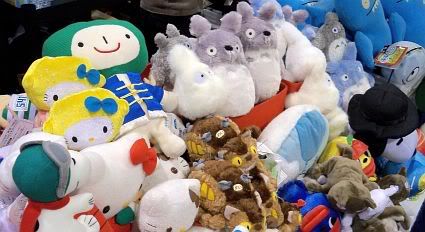
Plushy Stand at the Giant Robot booth
San Diego, July 22 – The San Diego Convention Center opened its doors for the first full day of Comic-con International. Standing behind the plushy Totoro (トトロ) dolls at the Giant Robot booth, I was prepared for the onslaught of attendees.
First David Choe Signing
Our first major event was a signing by David Choe. Choe has been a major artist and painter in the Los Angeles art scene for the last several years. His pop sensibilities and graffiti style artwork has garnered a huge following among both art collectors and street artists. It’s a balancing act that keeps Choe's work on the cutting edge of the avant-garde.
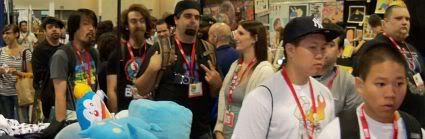
Line for Dave Choe signing
Even before Choe’s arrival, his fans were lining up for the event. They were eager to chat with the artist and get their stuff signed.
Monday, June 14, 2010
A Different Shade of Red
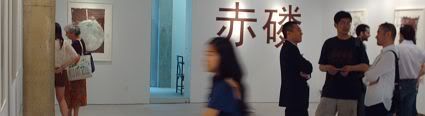
NEW YORK, June 4 – The Chambers Fine Art held an impressive exhibition opening for a young Chinese artist named Ye Nan. The exhibit is named Red Phosphorous and had an interesting mix of abstraction, industrial grit, and political propaganda.
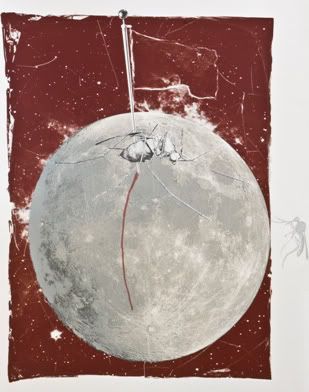
Who Conquered Theirs
Most of Ye Nan's work consisted of thin layers of paint and red liquid phosphorous. Phosphorous is an industry chemical used to make matches, pesticides, toothpaste, and detergents. The phosphorous, which is used in Nan's paintings, gives his work an industrial quality similar to Robert Rauschenberg's Combines in some respects.
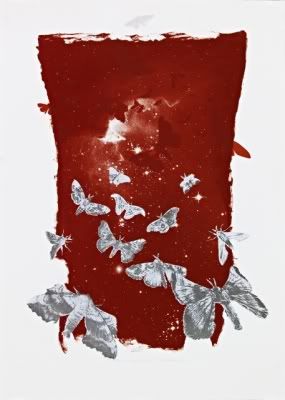
Ideal Nation
In terms of content, Nan's use of overtly political titles and subversive imagery adds a philosophical element to his work. Although he is too young to remember the early Chinese Communist revolution, he masterfully incorporates its propaganda techniques into his art. For example, his monochromatic use of the color red and the frequent employment of flag motifs are directly referencing the visual vocabulary of early Chinese Communist propaganda.
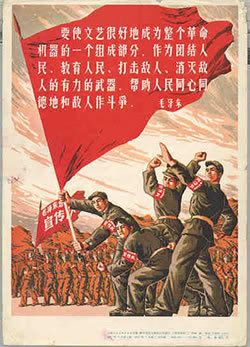
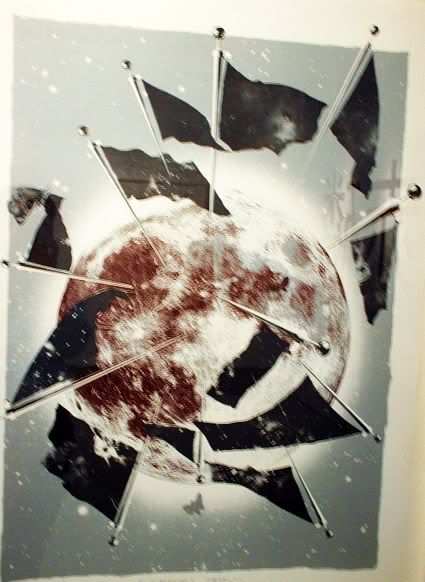
We Still Have Many Virgin Islands
Despite his visual usage of Communism propaganda techniques, the spirit of Ye Nan's artwork is actually the product of contemporary Chinese attitudes and modes of thinking. According to the exhibition statement, his work is drawing inspiration from industrialization, science, politics, and rock music.
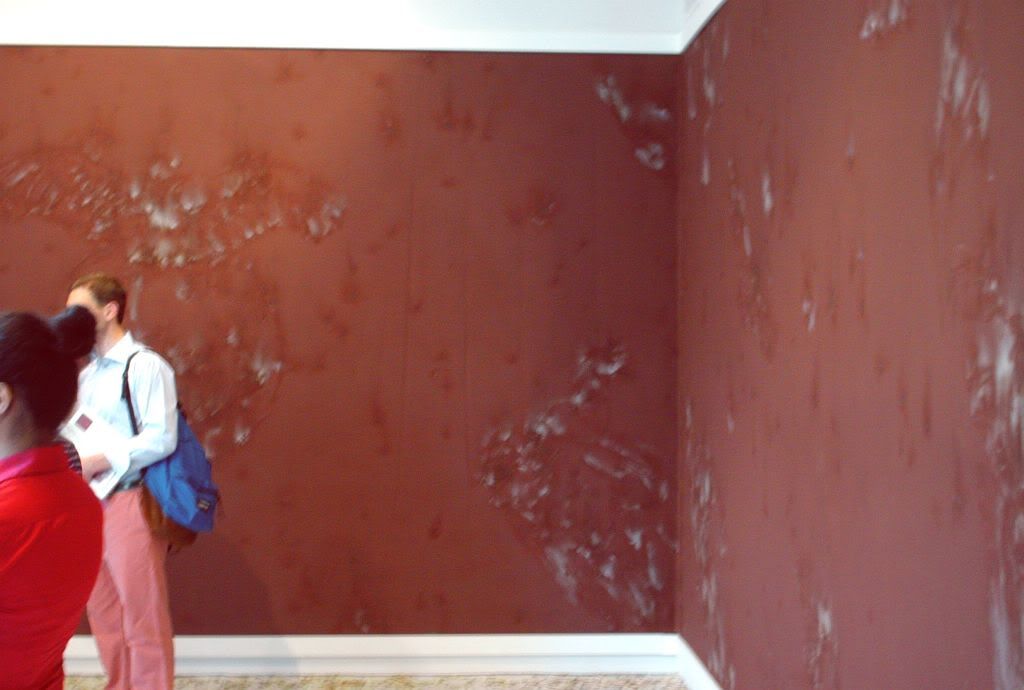
Ultimate Victory
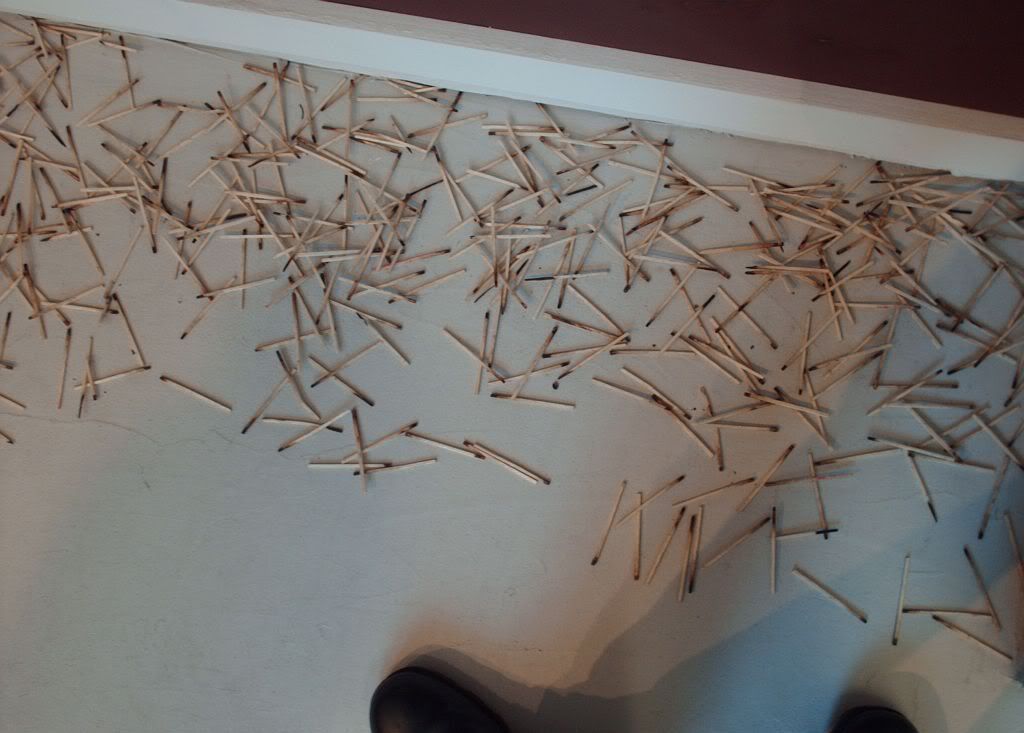
Ultimate Victory (detail)
Monday, June 7, 2010
SCION 6
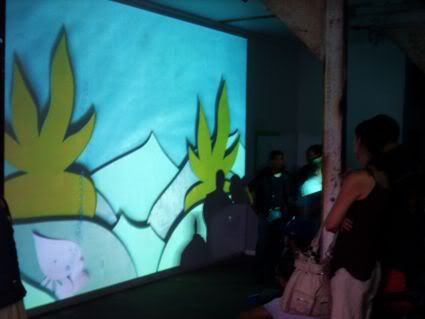
Breathing Underwater Short by Eric Nakamura and Saelee Oh
NEW YORK, June 4 – As a major promotional tour, Scion (division of Toyota Motor Corporation) sponsored a gallery installation consisting of avant-garde short films. Touring under the name of Scion Installation Six, the gallery show held an exhibition opening at the Eastern District in Brooklyn.
Surprisingly the gallery space was a small sliver of real estate that was probably someone's garage in a former life. In terms of set-up, the show consisted of three different projectors which played several short films simultaneously. Each projector was focused on different spots along the gallery's bare walls, and gallery visitors were constantly shifting their attention from one spot to another.
The gallery installation tour featured videos from many different artists including Eric Nakamura (Giant Robot Magazine), Saelee Oh, Dust La Rock, Funeral Fog, Ill-Studio, Josh Graham, Mark Mothersbaugh, Monihan Monihan, PMKFA, and Sage Vaughn.
There were a few notable film shorts.
Breathing Underwater. The first was an animation piece by Eric Nakamura and Saelee Oh. Their brightly colored animation was a cut-out stop-motion video similar to South Park. The short featured an underwater world of sea creatures, fish, and bizarre characters. It was very serene. Behind the Scenes of Breathing Underwater
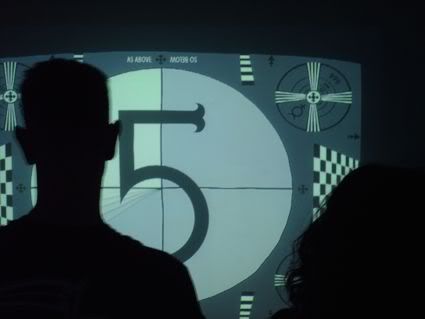
Video Montage by Dust La Rock
Dust La Rock. Another amazing short film was created by Dust La Rock. It was a bizarre film collage of famous images including Roman busts, religious symbols, and Black Panther demonstrations. The whole film was framed by graphics similar to a film leader countdown. I enjoyed the bizarre mixture of symbolic and historical references.
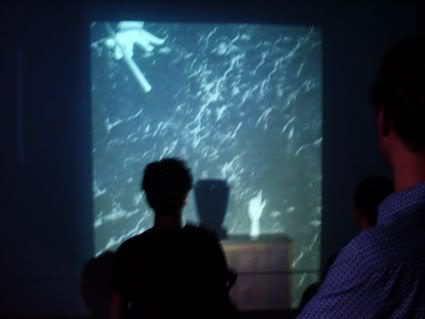
Holographilia by Ill-Studio
Holographilia. It's probably one of the most psychedelic films of the entire traveling gallery show. Ill-Studio's creation featured mannequin hands floating across the screen and disembodied human hands playing piano keys superimposed over a marble wall. A sad creepy piano melody is played during the entire film. Very creepy. Behind the Scenes of Holographilia
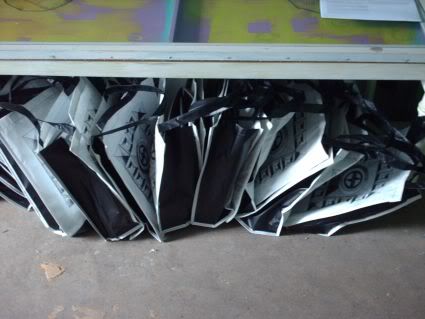
The Scion Swag Bags
Some gallery visitors came for the amazing videos, and others came for the swag. The gallery was stuffed with tons of Scion swag bags.
Related Links:
Friday, June 4, 2010
The New Grand Tour
NEW YORK, June 3 – A group of notable artists traveled to the remote regions of China (including Tibet) to find artistic inspiration. Their travels resulted in an interesting group show at the Bryce Wolkowitz Gallery. The show was titled "The New Grand Tour" borrowing the name from a western cultural practice of sending young (aristocratic) adults to tour the great cities of Europe.
I had a few problem with the curating of the show. The gallery did not label any of the pieces in the show. Especially in a group show, identifying artists and their works is important. I asked someone working at the gallery for any gallery guides, lists of works, or a simple exhibition postcard. They had no clue, and I couldn't find any literature located in the exhibition area. Forget the website. It's a very beautifully designed flash menu system, but it's not functional.
Regardless of the curating problems, the art was pretty interesting. The incorporation of local religious and tradition folk art with a modern aesthetic was fascinating.
Artists featured in the show: Suitman & Young Kim, Deanne Cheuk, José Parlá, Rey Parlá, Rey, Rostarr A.K.A., Romon Kimin Yang, and Davi Russo.
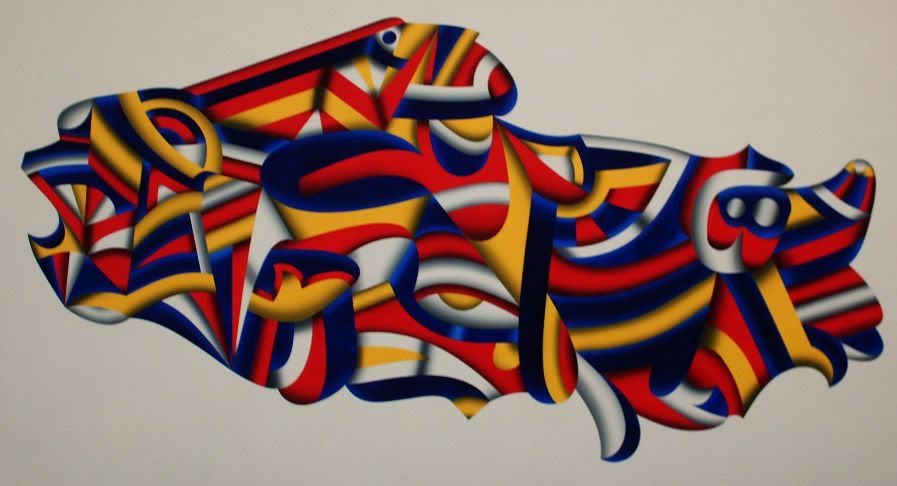
Here are a few pieces from the show:
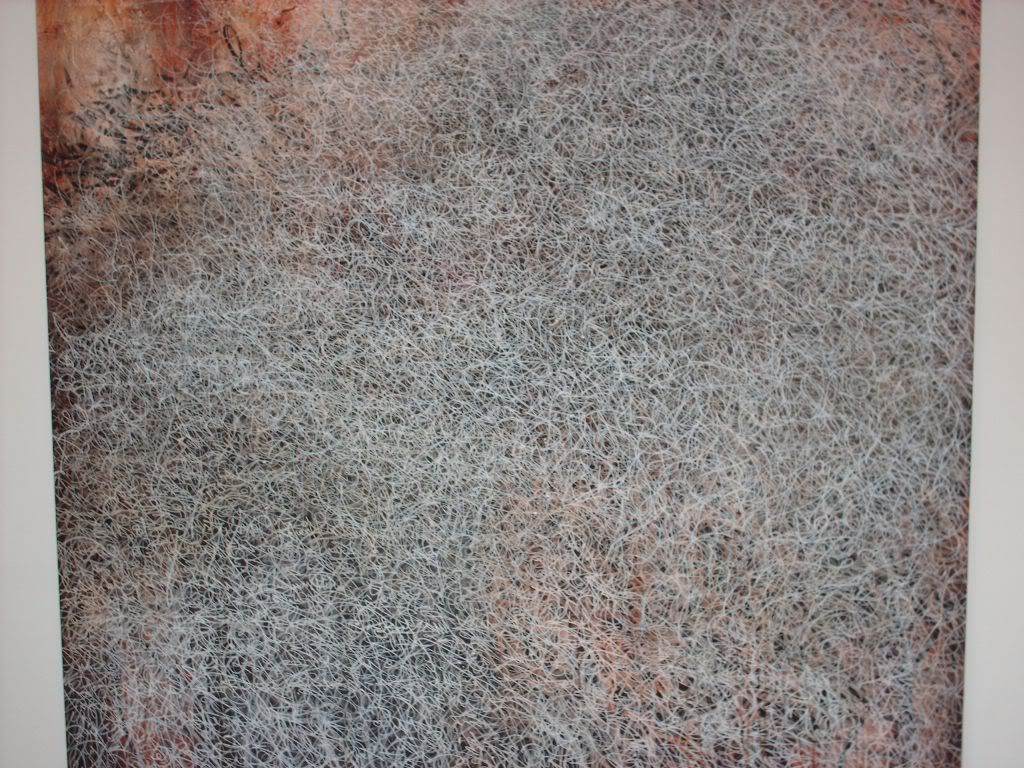
Artist: José Parlá
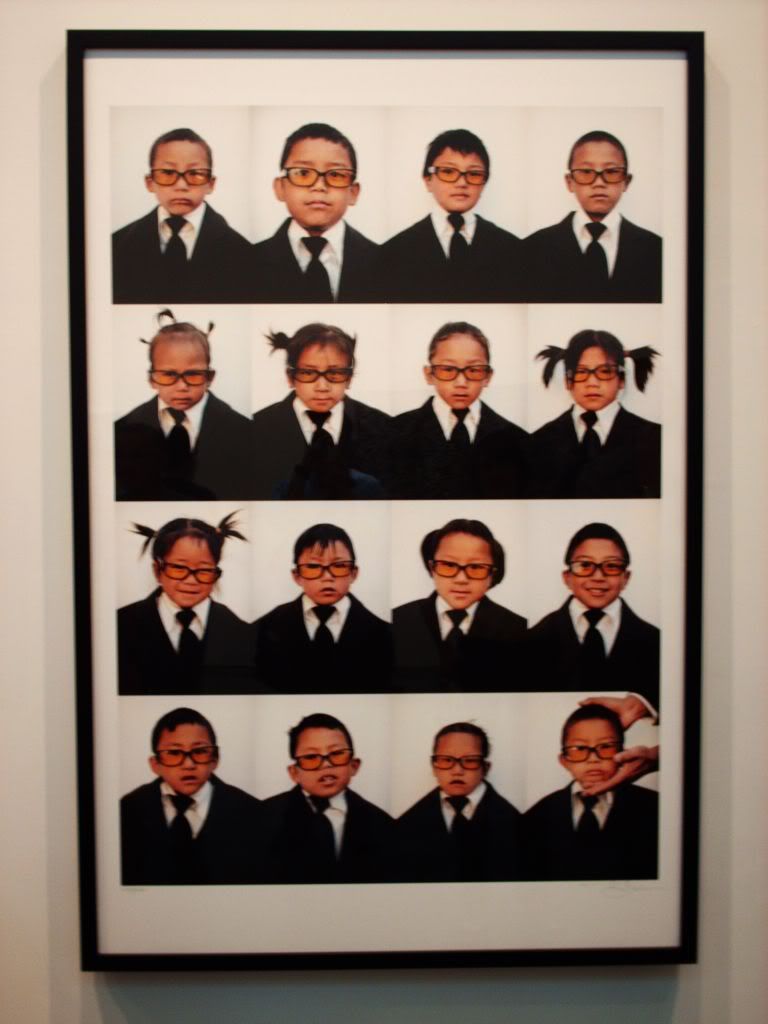
Artist: Suitman & Young Kim
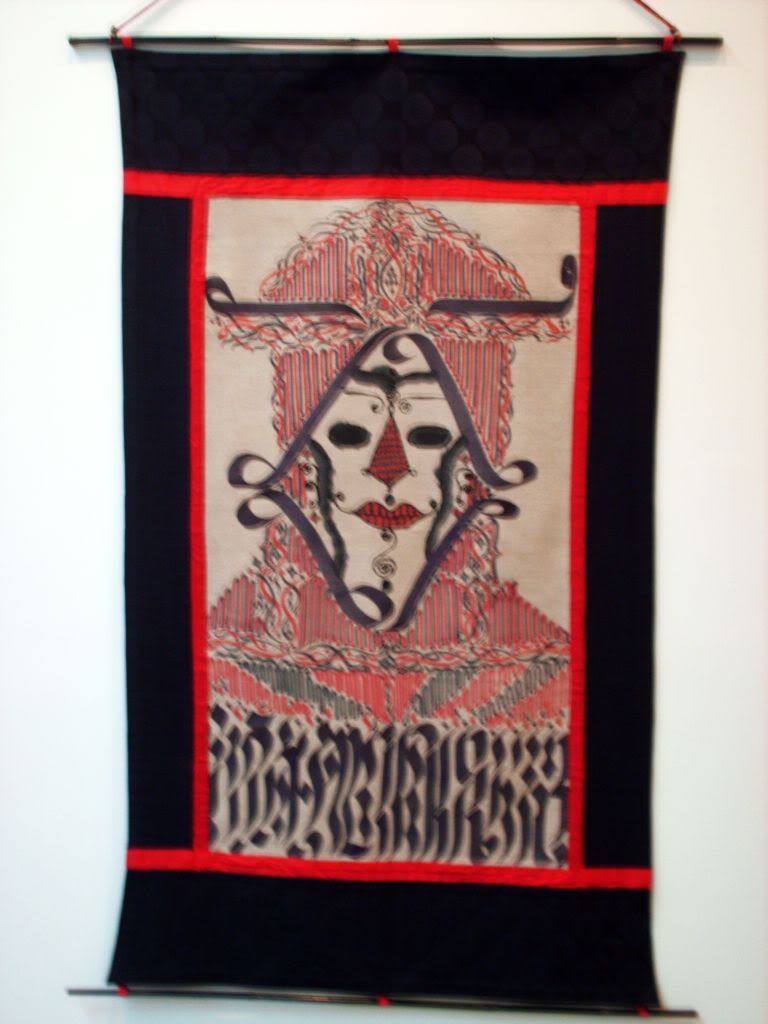
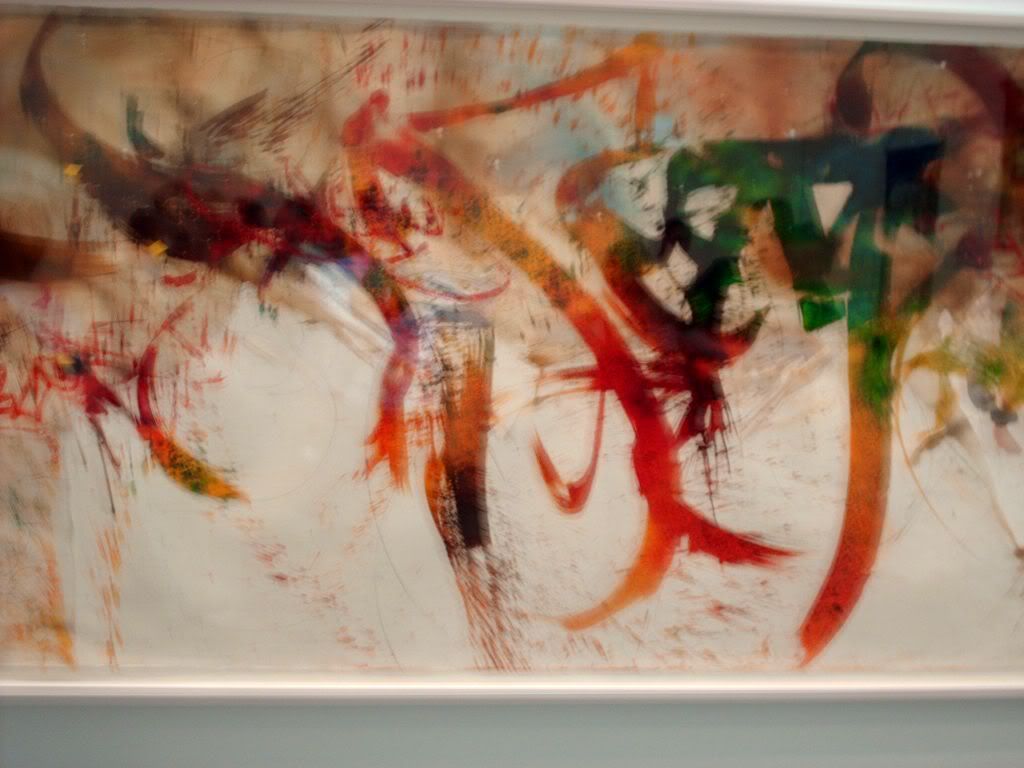
Related Links:
Thursday, May 27, 2010
Kondoh Akino: An Alternative Mangaka, Part 2
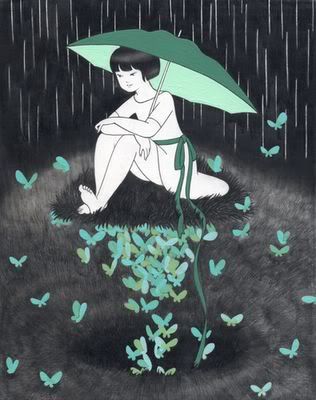 NEW YORK, April 21 – This is the second part of the transcript for the artist discussion with mangaka Kondah Akino (近藤聡乃).
 TRANSCRIPT, PART 1 | PART 2
Ryan Holmberg: [Referring to Rainy Day Blues] This is one of the works appearing the English AX anthology. Sometimes your relationships between object and spaces are so horrific. Especially after 2003, they didn’t have this gothic or horror elements to them anymore. So often objects like umbrella and bracelets are lost and found again. It deals with memories. As your career develops, you still have this attachment to objects.
Kondah Akino: As I’ve said before, the beginnings of my stories are inspired by particular objects. In this case, it’s an umbrella. The depictions of horror and Gothic themes decreased in my work because my artistic tastes changed. Since I haven’t published frequently, there are a couple of years in between works. So, my work might appear to be very different between the current work and the preceding one.
RH: This is kind of annoying, now, forcing the amity towards Garo. Hayashi Seiichi, who is a very significant Garo (ガロ) artist, wrote the afterward to your first book. Hayashi is in the show and is most well known for his major Garo serial, Red Colored Elegy (赤色エレジー). More recently Red Colored Elegy was published by Montreal’s Drawn and Quarterly a couple of years ago. It’s on the reading table in the show. In addition to the afterward of your book, I believe he is always the judge for the AX amateur submissions. So, can you tell me about your relationship with Hayashi and his work?
KA: I first met Mr. Hayashi as an animation artist, not as a manga artist. I’ve been told by others that my artistic style resembles his, but I actually haven’t seen his work until that time.
RH: You know, I think the things that look a lot like Hayashi are those flowers in this negative space [referring to slides]. Even this book that this boy’s reading that drops into the gutter on the top. It looks like the cover to one of the edition to Sekishoku Erejii (Red Colored Elegy).
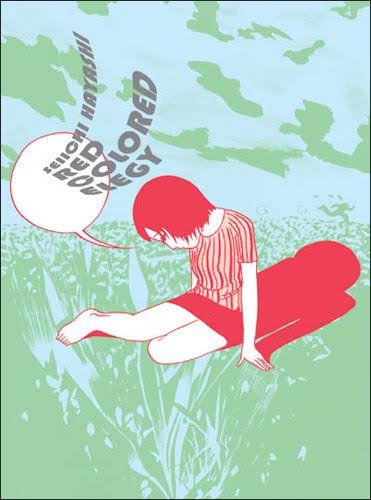
Red Colored Elegy by Seiichi Hayashi
KA: You might be talking about the other cover he did for Emino Kusako (sp?). A small sized novella.
RH: Emino Kusako is a Gothic Fiction writer. You said it was a cover for one of his pocket sized books. So you are interested in Emino Kusako?
KA: I was really more interested in Emino Kusako rather than Edogawa Rampo - Tarō Hirai (平井 太郎).
RH: I’ve brought some comparisons. Your work, Beautiful Town (美しい町)(2001), reminds me of Hayashi Seiichi’s Town of Falling Flowers (1968). Some of the pages have a very similar use of space. Also in some other scenes of a running child, there are certain sounds emanating outward.
KA: I heard that Mr. Hayashi was also told by someone else that his style resembles Ryoji, the painter. Mr. Hayashi was also telling me that he had rarely seen his work. [These common influences] comes from growing up in Japan and seeing similar things. We happen to share a common source of inspiration. We don’t really know …
RH: This is kind of an insider thing for people who know about Japanese pop culture, but your girl runs like Arale-chan (則巻アラレ) from Doctor Slump. (audience laughs)
KA: That’s possible.
RH: It’s possible? Another thing I want to discuss is your fascination with insects in your manga.
KA: I’ve always like insects since I was a child.
RH: What about them?
KA: The shapes and colors. I like to position them in between objects and humans.
RH: [Referring to Beautiful Town] There’s a lot of transformation and metamorphosis in your work. In this case, one girl is tricked by another into thinking that if she looks at ants closely they will turn into butterflies. It’s not really clear if this is actually true of not. Here you have her squatting down and focusing really closely at the ants. And all of a sudden they burst into butterflies. It seems like insects often times use the trope of metamorphosis.
KA: Maybe you’re right about that… [audience laughs]
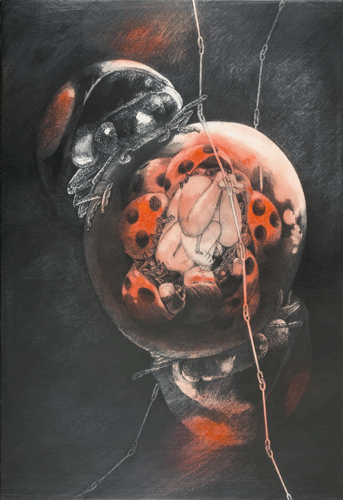
“Ladybirds' Requiem” (てんとう虫のおとむらい) by Kondoh Akino
RH: [Referring to Lady Bug Funeral (てんとう虫のおとむらい)] I think this is one of your most famous scenes. I think a lot of people know this work. What is she wearing?
KA: It’s just a story about a girl who sews hundreds of buttons onto the back of her dress. When I realize that buttons resemble ladybugs, I decided to make this work. In this case, the buttons transform into ladybugs and bites the person.
RH: Have you made this dress?
KA: No.
RH: Is this completely fiction? Now, this is another work on your left [referring to Grave of the Butterflies]. You told me that you like Umezu Kazuo, the famous horror girl’s manga author from the 50s and 60s. Often times Kazuo has insects appearing in his work. The girl is usually inflicted by insects. In this case, the girl is traumatized by a butterfly shadow that she sees in her youth.
KA: I don’t know this particular work by him. Regarding Kazuo, I consider myself a fan, but I’m not really influenced by him. I don’t really see any of his influence in my art work.
RH: Your work has many different connections to horror fiction. Whether it is Umezu Kazuo, you do have different themes with it and backgrounds…
KA: When I was in Junior High School, I read novels by Kazuo almost every day. I know it had a tremendous influence on me…
RH: Here is another Umezo. You have a lot of pattern in your work, but you always hand draw it. Where traditionally a lot of manga artists use lattice patterns and screen tones. You always hand draw it.
KA: I just don’t like screen tones. That’s why I didn’t use them. I just don’t like cutting them and pasting them.
RH: So, now, shifting gears. You have also been active as a painter.
KA: Painting has not really been a major element in my body of work. I’ve only started oil painting recently. This particular work was done as a school assignment.
RH: While you were in art school, you were doing painting, illustration, and manga at the same time.
KA: When I was in university, I really didn’t do much painting. I did study design and practiced a lot of drawing.
RH: In the United States and some Japanese schools, there are more and more classes for making comics and sequential art. Were there any comic art programs when you attended Japanese art school?
KA: I believe Kyoto Seika University in Kyoto has a manga department, but the Tama Art University, where I received my BFA, doesn’t have any specific manga programs.
RH: Was it acceptable to draw manga while you were in art school?
KA: Manga was totally created on my own as any independent work.
RH: [Referring to Menstral Flowers] I’m just going to go through the paintings and make comments. So, I’ve already made comparisons which are already unacceptable. They will really annoy you. To me… Something about your paintings remind me of post-war manga and neo-traditional painting with the use of floral patterns derived from old nippas. The girl is positioned in a certain way that really makes me think of a notorious screen from 1980 by Kayama Matsuo. We’ll just keep going… Obviously there are other connections. Specifically art historical. You have been doing some that are slightly Japanese art history versions?
KA: If you say so…
RH: This is not a definite reworking of Japanese art history?
KA: Maybe so…
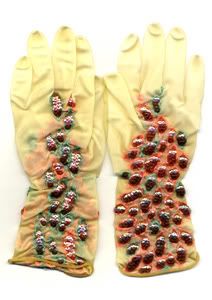
RH: [Referring to slides] This is your recent work from 2008. Your work seems to get more and more psychedelic and abstract. You also do some sculpture. You described one earlier. This seems related to your first comic about the girl who has a hand with tadpoles on it. This was supposed to be interactive sculpture.
KA: This work was about touch and texture. This was about the tactile feeling when you touch a slug.
RH: What are the slugs made of?
KA: Sequins.
RH: People are supposed to wear these?
KA: No. It’s very fragile so you can’t really wear it anymore.
RH: When was it made?
KA: 2002.
RH: Now, here are some sketches for your animation. You’ve made two finished [animated] works. You’re making a third now. We’re going to screen both of those.
[ANIMATION 1]
RH: When did you animate this?
KA: I did this in Junior Year [of art school].
RH: Was it a music video for a band?
KA: I first used the music without permission. A few years later, I officially obtained permission from the artists and remade the animation. Then, I became friend with the musician and writer, Tomohisa Hitoshi Ware.
RH: Is there anything you can say about the production process?
KA: I just drew so many drawings everyday in order to come up an image. Then I came up with a storyboard. Following the storyboard, I create large drawings and colored the animation.
RH: All hand drawn?
KA: Yes. The second animation required 15 drawing or images. Animation is a painstaking process. This work was also created while I was at university for my BFA exhibition. I didn’t like the finish, so I recreated it. The reworked version was finished in 2006.
RH: It received gallery distribution. Does the Asia Society owns the previous one or the next one?
KA: This one.
RH: This is not cell animation, right? You draw the figures and the backgrounds separately and put them together in the computer.
KA: It’s all done on paper. Then I sometimes cut them out and recompose them in Photoshop.
RH: So, I want to let people ask questions. Thank you very much. [applause]
Question 1: I was curious. Have you shown your work at any film festivals?
KA: I’ve never shown at any festivals. I’ve never been interested in that…
RH: Are you going to show your next animation at a film festival?
KA: No. I’m not finished with that one. So, it’s going to be a while. I’m actually wondering whether to show it in a festival setting or a gallery setting. Because if I show this in the gallery first, it would be difficult to go the other way. I still have to figure out how to sell and market it. The exhibition editions of my animations are priced very high. Regarding the animation that I’m working on now, I would like to mass produce it and make it more available. I would also like to make these available on the internet.
RH: You can see these on Youtube, right?
KA: [nods in agreement]
Question 2: When you start your films, do you have an outline? Because your work is multi-referential from a psychological stand-point, from an art historical stand-point, and in the sense of biology usage. I’m referring to insect imagery and mushroom imagery. Are you thinking about those issues and plot it out? All these reference and how you to put them in there?
KA: Regarding animation, I strictly follow my story board. I don’t really deviate from it.
Question 2: So it’s all structured out…
KA: The first work was made improvisationally. Are there any relationship between my storyboards and paintings? I actually became concerned myself that there is a gap in artistic style between my animation and storyboard. That’s because if the animation has too many details, it becomes too labor intensive. It would require you have to create thousands of frames. But I was shocked by the aesthetically low-quality of my animation, then I started doing paintings. I like to raise the artistic quality in my next animation.
Question 3: Growing up in Japan, have you read any shojo manga?
KA: Barely read any girl’s manga or comic books.
Question 3: Is it because you don’t like the style?
KA: It was mainly because it was not allowed in my household when I was growing up. That’s why I have brothers… [audience laughs]
RH: Is that how you read Garo when you were young through your brothers? It’s difficult to imagine you reading Garo when you were young.
KA: No. I actually never read Garo when I was young. I only start reading Garo in high school.
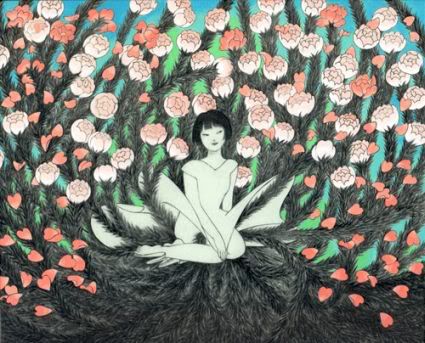
Question 4: Who is your primary audience for your animation?
KA: The first animation was shown on television in addition to the gallery. It had a wide audience. On the other hand, the second animation was only shown through galleries, so only people interested in contemporary art has seen it.
RH: You’ve shown your animation in shows in China, Singapore, and Europe.
KA: Yes, in Belgium and France.
RH: Museum shows?
KA: In the beginning, it was museums and festivals.
RH: Not film festivals.
KA: Not film festivals. The opportunities came about by themselves. I didn’t seek them. I was invited and went there to present my work.
[READ PART 1]
Monday, May 24, 2010
David Choe's Nothing
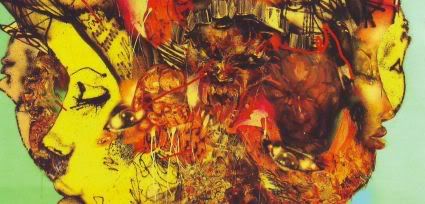
As of the post date of this article, David Choe's Nothing to Declare has officially concluded it's run at the Lazarides Gallery. The exhibition had an amazing mix of figurative aesthetics, bio-morphic masses, and wild abstraction. Here are some of my photos from the Thursday opening:
LOS ANGELES, April 23
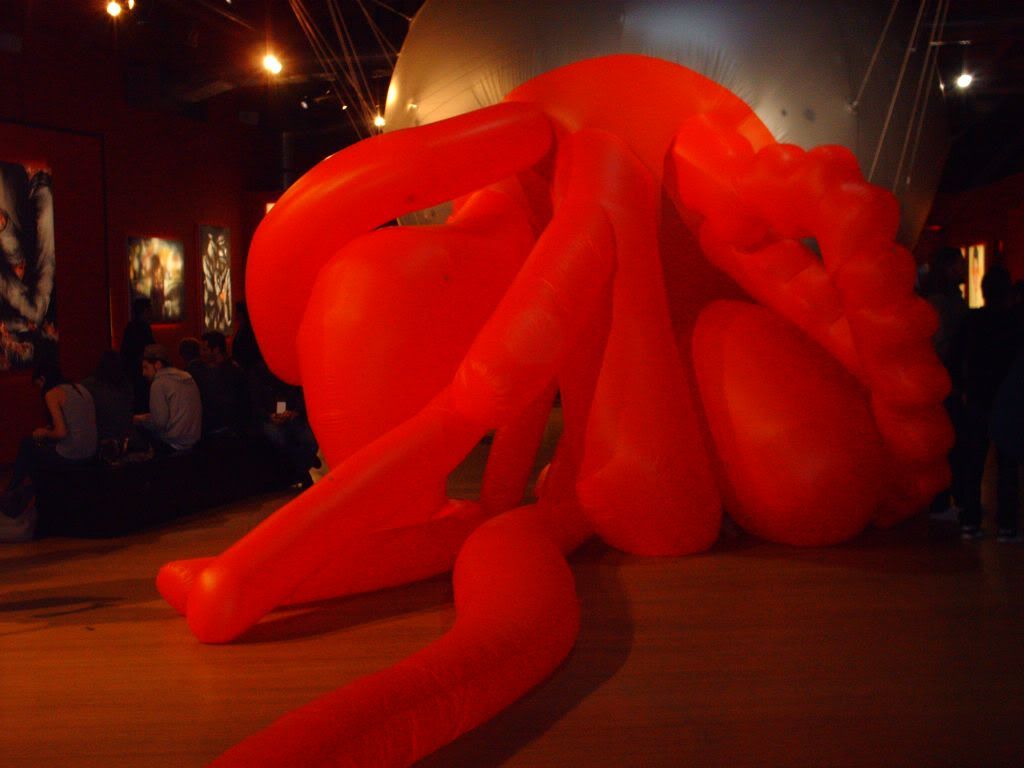
In the center of the gallery, Choe presented a huge squid-like bio-mass. It was a partially filled balloon-like structure. Extremely playful.
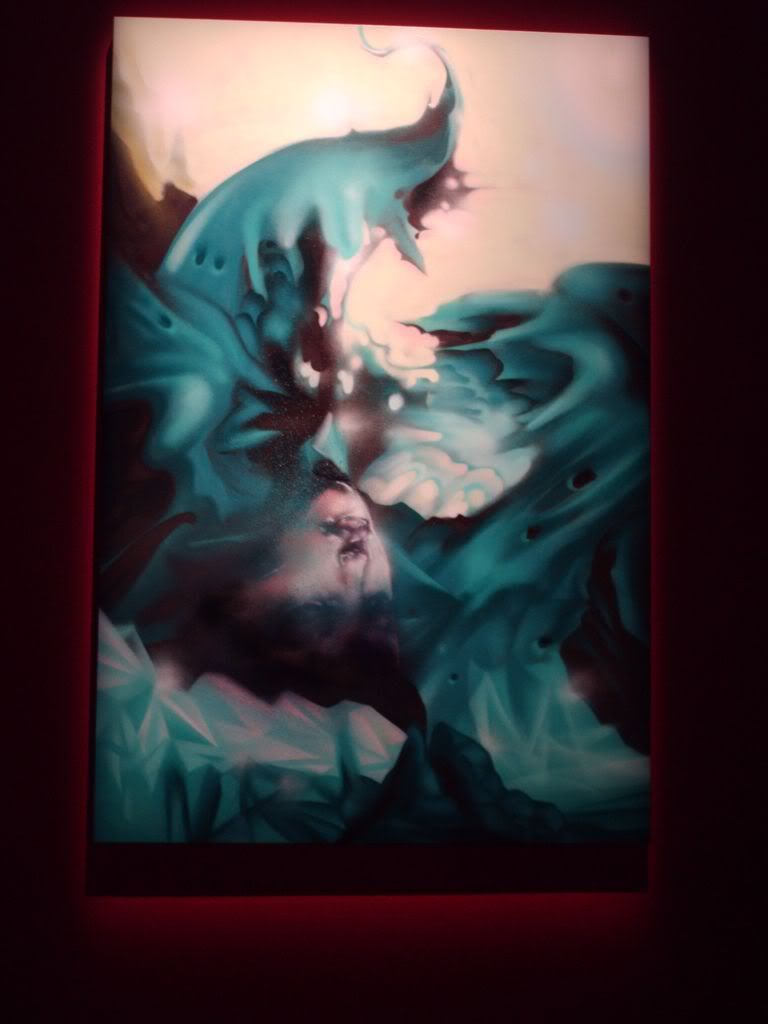
Choe has a gift for mixing amazing portraiture with other styles and themes. This one combines female portraiture with a wave similar to The Great Wave off Kanagawa
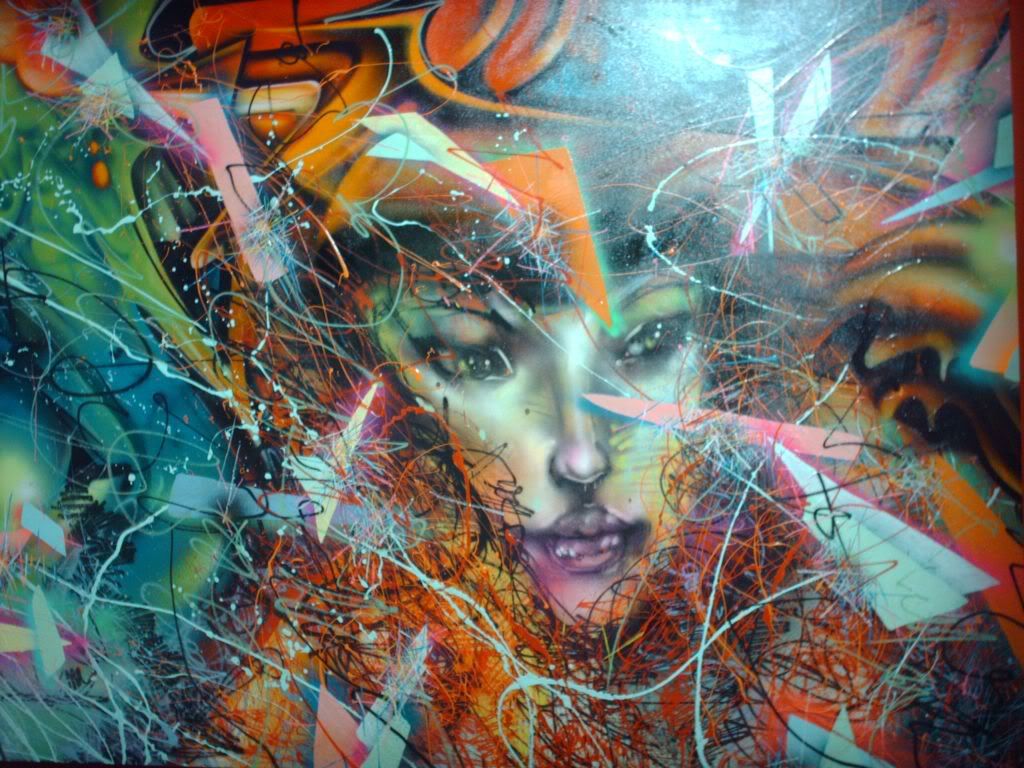
Another great portraiture amalgamation by Choe. He mixes female portraiture with energetic abstract expressionism.
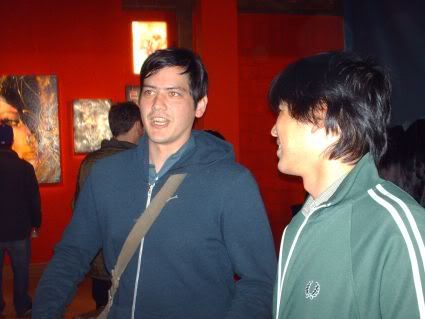
Choe's opening attracted an interesting crowd featuring Rob Sato and Martin Wong.
Wednesday, May 12, 2010
Kondoh Akino: An Alternative Mangaka, Part 1
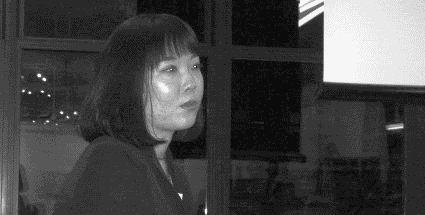
NEW YORK, April 21 — In conjunction with their recent Garo exhibition, the Center for Book Arts hosted an artist discussion with mangaka Kondoh Akino (近藤聡乃). She has been widely published in AX magazine, which is the spiritual successor of Garo. Kondah also produced two books. Currently she is focused on her painting and short animation. [Interpretation by Midori Yoshimoto]
TRANSCRIPT, PART 1 | PART 2
Ryan Holmberg: I’m happy to introduce Kondah Akino who is typically stationed in Tokyo. But, you spent last year in New York, and you are here for how many years?
Kondah Akino: One or two years.
RH: She only tangentially actually related to Garo. I thought more than she is… having read her work. She insists that the connections are thin, but I might push her on some of those [connections]. At any rate, we are lucky that she is in New York. She is a very active and well known alternative manga author who is in the trajectory of alternative manga that Garo(ガロ) founded.
So you made your debut in AX in 2000. Can tell me a little bit about your art practice before you started publishing manga professionally?
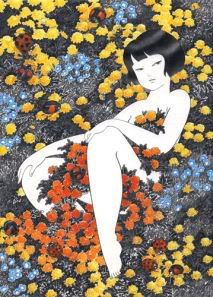 KA: When I debuted as a manga artist, I was a sophomore in university. But I originally started drawing manga as a senior student in high school. At the time, I was also going to prep school for university entrance exams. I was studying art there as well.
Actually when I was child I wasn’t really a big fan of manga. I wasn’t really reading a lot manga. I didn’t have any particular interest in it. I did hear about Garo as a child. I didn’t actually encounter it until high school.
RH: Your first work was self-published. Is that correct?
KA: Something like that.
RH: Can you explain it? When most people usually think about self-publishing manga in Japan, they think about amateur doujinshi, otaku culture, and ComiKet. Your first work takes a completely different trajectory in regards to self-publishing.
KA: I never participated in doujinshi or Comi-cons. I never participated in anything like MoCCA [Art Fest].
RH: What is the distribution of some of your early work? Self-published comics are fairly typical here, and there are a lot of outlets. In Japan, there are only a couple of outlets.
KA: For my graduation work, I made 500. I reprinted it for my school exhibition and made 100 copies. There was an assignment for a free style competition at my prep school, and I created my first manga with a stapler. I simply binded them together with staples.
RH: [Referring to slides: Girl's High School Life Bookmark(女子校生活のしおり)] Story is set in a Japanese girl’s high school. There are two main characters. One is always sleepy and a bad student. She’s always dreaming. The other one is a typical literary girl who is always spouting stories and making up stories… sometimes lies. There is a slightly erotic connection between them, and the art girl is an object of attraction for the sleepy girl.
KA: I didn’t particularly draw these erotic scenes or connotations. But there might be some depictions that might make you think that one is attracted to the other.
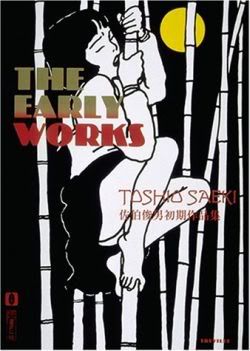
The Early Works by Saeki Toshio
RH: In this panel, she has tadpoles growing out of her hands, and she’s licking them. I’m interested in the stylistic influences. I mean I like the pattern in a lot of these.
We’ve talked about this. It reminds me of the work of Saeki Toshio (佐伯俊男). Saeki Toshio was a very popular illustrator who got big around 1969-1970. He started publishing erotic illustrations in Japanese magazines. [The illustrations] often times involved Japanese high school girls in sexual situations. They were molesting their toys or being molested by old men. There are rough thick lines.
What elements of Saeki Toshio’s work appealed to you?
KA: When I discovered his work, I was a high school girl. It wasn’t his erotic interests or erotic depictions that attracted me. Rather, it was the beauty of his line [work] and the formalistic aspects.
RH: We believe you completely, but... (audience laughs) Look at some [of her work], and there is an erotic element. The types of elements are very much Saeki based such as fluids dripping, licking, and some kind of biomorphic things.
KA: I was primarily attracted to his skills.
RH: Skills at what? (audience laughs) There is also the sexualization of Japanese high school girls. I mean his work is tied up with normative Japanese male sexual fantasies. Your work has a female subject. It was interesting that you appropriated Saeki and use it to talk about women’s issues.
Your first work published in AX for 2000 and won some prize for AX. It’s not the top prize…
KA: The Encouragement Prize. [AX Manga Newcomer's Award / Encouragement Award]
RH: [Referring to slides] It was published in 2000. It was called Kobayashi Kayoko (小林加代子) which is the name of the protagonist. It’s a little hard to summarize. There’s a girl name Kayoko who runs a slipper store. Running a slipper store is a pretty abysmal fate for a young girl. Then she gets a little excited because across the way there is boy. He’s running a light bulb store. Can you tell me a little bit about the story?
KA: This girl is running an unpopular slipper store. She can hardly sell anything, so she’s thinking of turning it into a candy store. Then a boy moves in across the street and begins a dialogue between them.
RH: So, it’s like a romance?
KA: No. It’s not a romance.
RH: I can’t remember the story exactly. She has various crises around her situation. Then later on, if remember right, the boy gives her a TV.
KA: The TV was hers. It was not a gift from the boy.
RH: So, she somehow gets electrified by the boy? What’s the course of the story?
KA: I can’t quite figure out why I came up with this strange story. I had a lot of things to worry about back then, and I just can’t figure out why. (audience laughs)
RH: If I remember right, at the end, she’s about to give up on the candy store. Then she finally decides to keep the slipper store. At the end, you see an expanded slipper outlet.
KA: She started selling the sandals that the boy made.
RH: If I remember right, he cuts out one of the slippers. It’s his invention. This is your first story. I noticed in a lot of your work, there is an interest in a certain retail space in Japan: shopping arcades (Shōtengai 商店街). There is a lot of signage, a lot of clutter, and a lot of specialized stores. What’s the appeal of these shopping arcades?
KA: It wasn’t just growing up seeing these old fashioned retail stores, rather I simply found enjoyment in drawing the details of old fashioned stores.
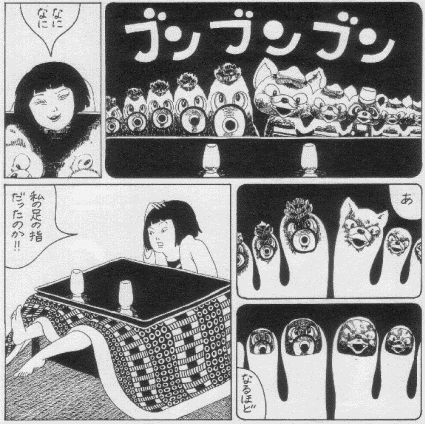
RH: It’s the detailed work of drawing so many objects packed in together? It’s a nice juxtaposition between the density of the arcade in the background and the simplicity of the figures.
The follow up story was not originally published. It only appeared in a book in 2004. It’s called “Around the Kotatsu” (こたつのまわりで). Kotatsu (炬燵) is a table with a quilt, and you put your feet underneath. Traditionally you put your feet down into a hole, and it’s heated. It keeps your feet warm. Modern kotatsu have a heat lamp on the bottom of the table to keep your feet warm. In Japanese households without central heating, typically this is where you congregate in the winter months. It’s kind of a social space. Tell me what happens around the kotatsu.
KA: This girl is similar to the girl who’s always sleeping. She’s always dreaming while sitting at the kotatsu everyday. The boy is simply emerging out of her imagination. It’s a similar story to Kobayashi Kayoko in that the girl is experiencing a bored life. She dreams of things that she can’t do in real life.
RH: In addition to your interest in dense shopping areas, I noticed in a lot of your work that you are interested in textures and patterns. You’re really interested in details. It’s also seems to be connected to an interest in objects. Objects have a real strong presence in your work in different ways. So much so that, [in one panel] the girl ends up merging with the object. It’s kind of a magical quality of objects.
KA: When I talk about story building, I’m referring to the Japanese expression: Kishōtenketsu (起承転結). It means beginning, development, twist, and the end. In the four part story telling system, usually my beginnings stem from my real life experiences. The beginnings are often inspired by specific things.
RH: One example is Box Garden (はこにわ). In one panel, the image is not a pen and ink drawing. It’s graphite, and it has a really strong independent presence which pushes everything out. In a work like this, you really pull out objects sometimes.
KA: I’ve always been interested in containers like boxes and dressers.
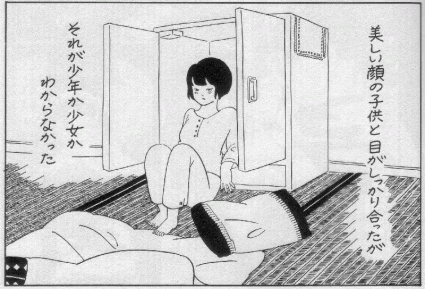
RH: What is the appeal of boxes, dressers, and cabinets?
KA: I don’t know why, but since I was a small child, I liked stuffing things into boxes or containers.
RH: [Referring to slides]In this case, your protagonist opens a drawing leading into a giant world. In the world, I think she sees herself in the past and decides to jumps into it. In a lot of your work, you have an Alice and Wonderland rabbit hole where an alienated woman finds a fantasy land.
KA: I think you are right, but I’m not totally conscious of it.
RH: Have you personally fell down a rabbit hole? (audience laughs) Do you think they exist? Seriously. Often times I see you. I always read the protagonist as you.
KA: My ideal girl is always the protagonist.
RH: The protagonist sometimes has her head in a box. In this case, little Maritians or little Moonlings crawl inside her head.
KA: Sometimes the head is a container as well.
RH: Sometimes the box is a scary place. Tell me a little bit about the story.
KA: In this story, this girl gets trapped in a dresser every night. In the beginning, those hands were snatching her from inside the drawers. They used to be a child’s hands, but they became an adult man’s hands in the end. The lower left panel depicts the moment when she tries to escape. She realizes that it’s not a child that is trying to keep her in the dresser. It’s an adult man.
RH: It’s obviously deals with female sexual aggression tied with these kinds of themes.
KA: It could be interpreted that way, but I’m not conscious of it either. (audience laughs)
RH: Sometime other types of spaces like under the bed sheets are filled with biomorphic and anemone type things. The protagonists are attacked by them. You’ll probably say that it’s not conscious either. The phalluses are coming from every direction. (audience laughs)
KA: It’s totally unconscious. (audience laughs)
RH: Where do these growths come from? Not in the story but the idea.
KA: One of my personal hobbies is researching catalogues of mushrooms and viewing them in botanical gardens. It might come from that hobby.
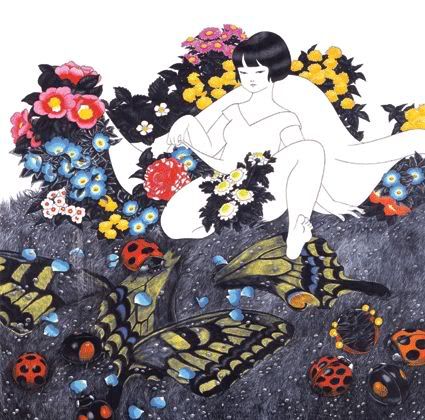
RH: It made me think of a number of things such as stories by Japanese pulp fiction author Edogawa Rampo - Tarō Hirai (平井 太郎). In one of his stories, the male protagonist takes all of the stuffing out of a chair and crawls into it in order to molest people sitting on him. In the Garo show, there's one based on it called “Cockroach Boy”. It’s about a deformed kid who hides between the folds of the comforter and molests the woman through the sheets. There seems to be a theme about things between the sheets.
KA: I didn’t know about Edogawa Rampo's work in particular. I usually draw manga without the intention to express something. I think of things that are visually interesting and start drawing.
RH: [Referring to slides] This stuff also made me think of other similar things such as this prune head guy on the ceiling. I also thought of this [referring to slides]. Midori Yoshimoto wrote a book about female Japanese performance artists. There’s a chapter on Kusama Yayoi (草間彌生). What do you think of it?
KA: Do you want to know what I think of it?
RH: In Kusama’s case… Do you know Kusama Yayoi’s work? No? She had a very comfortable, even obsessive relationship with these phallic themes. You’re a girl who is obviously less content. (audience laughs)
KA: I have a different version of my first published manga, the Box Garden. It depicted actual sculptures that sit in your palm. I made hundreds of them containing mechanical motors. I put the toys inside a set of drawers and presented it as an installation. It won the Kusama Yayoi award. Kusama Yayoi actually chose my work.
RH: Are you interested in Fluxus? It sounds like a Fluxus type of object.
KA: No. Not in particular
[READ PART 2]
Saturday, April 17, 2010
Garo: The First Decade (1964-1973)
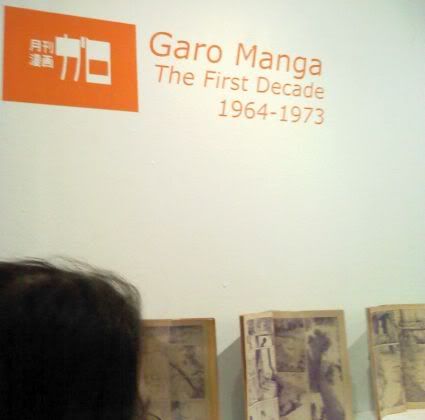
NEW YORK, April 14 — The Center for Book Arts held a gallery opening for an advent-garde manga magazine called Garo (ガロ). Garo is famous for launching the careers of many famous mangaka such as Yoshihiro Tatsumi (辰巳 ヨシヒロ), Sanpei Shirato (白土 三平), and Ryoichi Ikegami (池上 遼一). It also influenced modern storytelling in Japanese comics with titles that took a more mature approach to sequential art. Some manga readers claim that it paved the way for genres like Seinen manga (青年漫画) and Gekiga (劇画).
Garo started in 1964 as a small indie manga magazine. Katsuichi Nagai, the founder of the magazine, wanted to create an advent-garde publication that focused on progressive and experimental modes of storytelling. Unlike other manga anthology magazines, Garo was never categorized under a particular genre. Rather the magazine went through many different periods as it grew and changed.
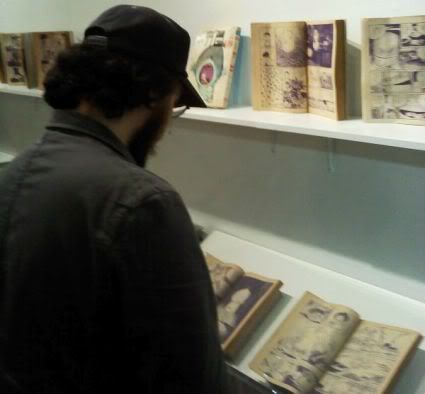
The exhibition was held in a very small gallery space which filled up pretty quickly. Moreover, I was surprised that parents brought their young children to the gallery opening, because some of Garo’s content is extremely violent and sexual in nature. I can only assume that the parents equated comics with kid safe. This is obviously not the case. There were some extremely violent and pornographic manga panels on display. For instance, one Garo spread featured a talking phallus. This is definitely not for toddlers.
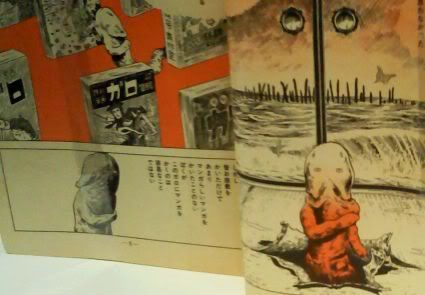
Talking Phallus
Most of the magazines were behind glass or displayed as an installation piece. I had to fight the urge to grab one and flip through it. It’s an old tachiyomi (立ち読み) habit.
The first section of the exhibit was devoted to Sanpei Shirato’s The Legend of Kamui which is probably their most widely read manga title. The Legend of Kamui is about a ninja who discovers the class struggle and discrimination of Edo period Japan. The historically based manga became a platform for the Shirato’s leftist political ideology.
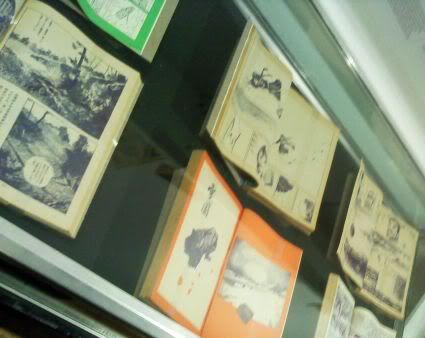
Ryoichi Ikegami display
Another interesting section was Ryoichi Ikegami section. It featured some of his early work before his amazing collaborations with Kazuo Koike (小池一夫). It’s interesting to see the early development of his hyper realistic art style.
Goseki Kojima (小島 剛夕), another Koike collaborator, also had a small section in the exhibit. He is renowned for his artwork in Lone Wolf and Cub (子連れ狼).
Towards the back of the gallery, I found a small section devoted to Yoshihiro Tatsumi. Credited as the father of the gekiga movement, Tatsumi’s section had some very racy material. Due to the amazing translation efforts at Drawn and Quarterly, I am very familiar with Tatsumi’s violent and socially dissociative storytelling. However, one of his Garo spreads had some hardcore incestuous gay sex scenes. I was unaware that he published LGBT material. The artwork was very similar to current Bara manga.
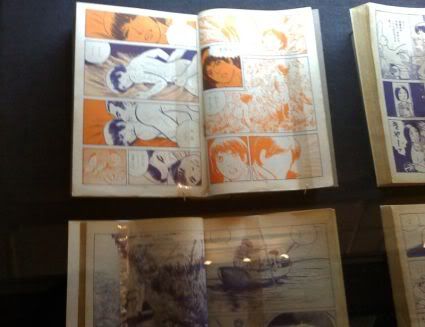
Yoshihiro Tatsumi display
The exhibition showcased Garo’s importance in the development of modern manga storytelling. Even though it was never as popular as other mainstream magazines, it managed to influence the entire industry and launched the careers of many notable mangaka.
Related Links:
Tuesday, March 9, 2010
Too Cute: American Style and the New Asian Cool (Day 1)
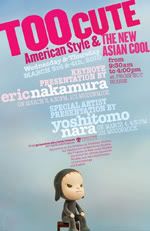
PRINCETON, March 3 — Princeton University hosted an academic conference about Asian American pop culture aptly named "Too Cute: American Style and the New Asian Cool Conference". The panels and schedules were arranged by Professor Anne-Anlin Cheng.
Child Love
Anne Higonnet, an Art Historian from Columbia University, started the panel with a presentation on the connection between the cultural concept of cute and definitions of childhood. She frequently referenced Haruki Murakami (村上春樹) and his artwork. Higonnet also mentioned Murakami uncanny ability to co-opt commercial product such as his line of custom designed Louis Vuitton hand bags.

Murakami's Version of the Louis Vuitton Hand Bag
Higonnet was followed by Christine Bacareza Balance. Balance, a University California - Irvine professor and vocalists for the Jack Lords Orchestra, conducted a presentation about Filipina Child Pop Stars. Her lecture was mainly focused on the cultural and political undertones in Filipino Pop Music. In her discussion, Balance talked about the impact of YouTube, American R&B influences, karaoke, and Filipino “palabas” concept. She used Charice Pempengco’s rise to stardom as a case study for her presentation.
Gertrude Ederle
Joon Lee, an English professor from the Rhode Island School of Design, read passages from one of his novels.
Girls on Girls
After a short lunch break, the conference continued with a panel about “Asian cool” from the perspective of girls.
Karen Tongson, a professor of English and Gender Studies at the University of Southern California, discussed the internet pop phenomenon known as “Rin on the Rox”. Tongson began her discussion by outlining the cultural factors that lead to the emergence of the two Filipino American internet pop idols. She also talked about the deeper cultural trends surrounding the duo. Tongson emphasized topics such as sexual undertones, homophobic reactions, and the modern perception of womanhood in the media.
The next presentation was conducted by Laura Miller, Anthropology professor from Loyola University. Miller’s lecture was primarily concerned with the Japanese concept of “kawaii”. As an anthropologist, she approached the topic by categorizing the different types of “kawaii” found in Japan. She made a clear distinction between regular “kawaii” (cute) and “kimo kawaii” (grotesque cute). At this point, Miller started to couch her argument in a resistance framework. She characterized “kimo kawaii” as a rebellious act by Japanese girls against the commercial exploitation of the “kawaii” paradigm.
The Keynote Address: Eating Rice with a Fork
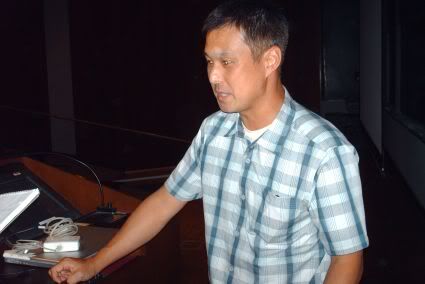
The day ended with an amazing keynote address by Eric Nakamura, co-founder of Giant Robot Magazine. Nakamura conducted a quick history of Asian American pop culture including personal stories about his own identity as a Japanese American. He described growing up as a product of two cultures that were intermingled. In an attempt to illustrate this “mashup” of identities, he humorously remarked that, “I eat rice with a fork.” The Ivy League audience enjoyed his wit and entertaining slide presentation. Towards the latter half of his address, he talked about the early days of Giant Robot Magazine and the evolution of the brand.
Subscribe to:
Posts (Atom)