The Random Access Information Blog has moved to a new URL address. You can find new posts at: raiwebs.com
Showing posts with label indie comics. Show all posts

Thursday, October 21, 2010

NYCC 2010: Everyday is Like GR Sunday


Giant Robot Invades

New York, October 10 – The last day at New York Comic Con was much calmer, and I saw more children in the crowd. My game plan for most of the day was booth duty. I spent most of the day answering questions and promoting Giant Robot Magazine.


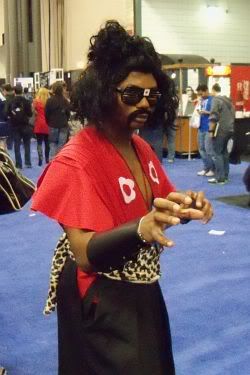
Sho'nuff visits the Giant Robot Booth

The booth had many different visitors. Most of the visitors to our booth were young artists looking to get involved with Giant Robot. I had long running conversations about Superflat, street graffiti, and the current art scene. I even ran into a few David Choe fans. They were hoping that Dave was going to be at the booth. Unfortunately I had to give them the bad news. On the other hand, younger booth visitors were looking for recommendation about everything. I was dispensing recommendations for anime, manga, Asian cinema, J-rock, and other related topics.

Monday, October 18, 2010

NYCC 2010: Saturday Funnies


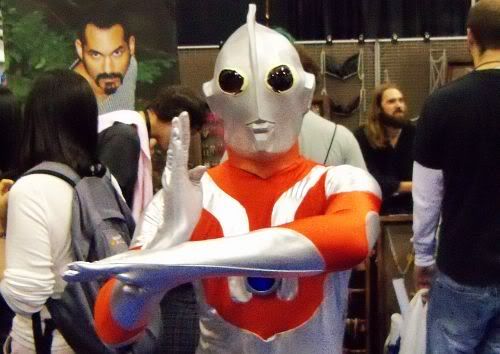
Ultraman (ウルトラマン) Cosplayer

New York, October 9 – Saturday is probably the busiest day during the New York Comic Con. I arrived early for many of the interesting panels including the Spotlight on Harper Collins, Digital Comics & Distribution, and Sushi Typhoon.

Vampires, Witches, and Zombies. Oh my...


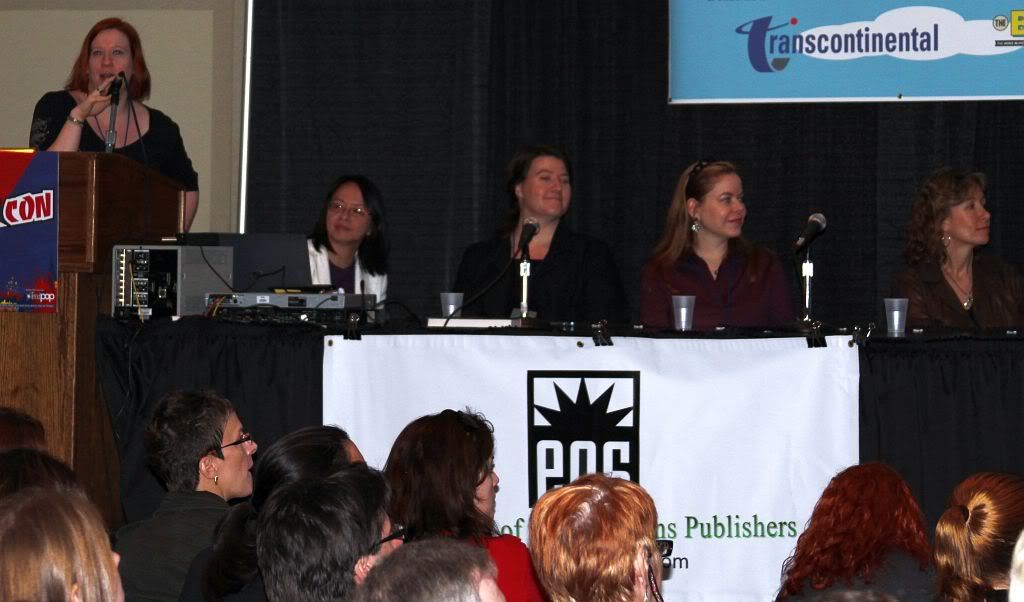
Spotlight on Harper Collins. Seated (Left to Right): Erika Tsang (editor), Margaret Ronald (author), Jeaniene Frost (author), and Pamela Palmer (author).

I popped into this panel to check out the announcements and support my cousin Erika Tsang. She is an Executive Editor at Avon Romance. The panel announced several supernatural romance fiction titles such as Majorie Liu's In the Dark of Dreams, Jeaniene Frost's Side of the Grave, and Kerrelyn Sparks' Vampire Mine. Despite the romance nature of the imprint, the line was filled with sexy vampires, powerful witches, and zombies invasions. The trend in romance fiction is leaning towards the supernatural with the popularity of book series like The Twilight Saga and The Southern Vampire Mysteries (True Blood).

Tuesday, October 12, 2010

NYCC 2010: The Brave and The Geeky


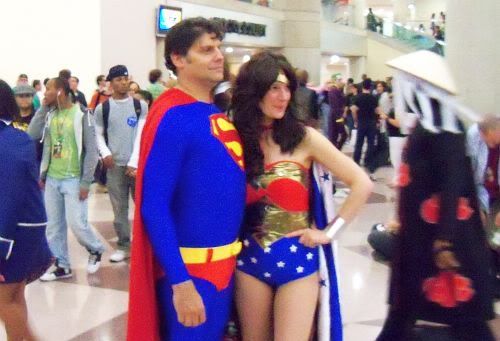
Cosplaying Couple posing as Superman and Wonder Woman.

New York, October 8 – Due to a late night pre-con party, I arrived to the New York Comic Con 2010 late on the Friday afternoon. There weren't too many interesting panels except the Aniplex one. I had a difficult time finding the press office to pick-up my badge, and the volunteers at registration had no clue. I wandered a bit and eventually got my badge. I headed over to the Aniplex panel.

Aniplex of America


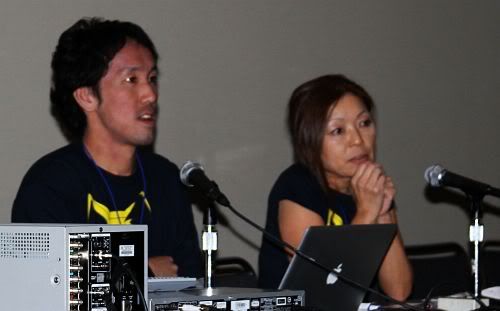
Aniplex PR team. Hiroe Tsukamoto (right).

As I was waiting for the panel to begin, Anime News Network (ANN) Editor Chris Macdonald sat right in front of me. I've run into him at other conventions over the summer. I greeted him, and we were trading war stories about this year's anime con season.

Saturday, October 9, 2010

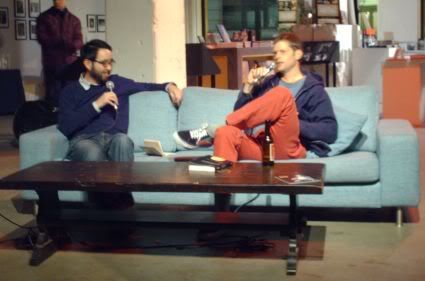
Best American Comics 2010 Book Launch with Neil Gaiman, Bryan Lee O'Malley and Gabrielle Bell


Left to Right: Neil Gaiman, Bryan Lee O'Malley and Gabrielle Bell.

New York, October 7 – Barnes and Noble Union Square hosted a book launching event for the Best American Comics 2010. The new anthology is a collection of the year’s best comics from professional, indie, graphic novel, and the web. The event was cleverly scheduled to coincide with the start of the New York Comic Con and tapped into the comic geek audience. The large event space was packed with fans.

The panelists for the event included: Jessica Abel (editor), Matt Madden (editor), Neil Gaiman (guest editor), Gabrielle Bell (contributor), and Bryan Lee O'Malley (contributor).

Sunday, August 15, 2010

SDCC 2010: Last Minute Heroics


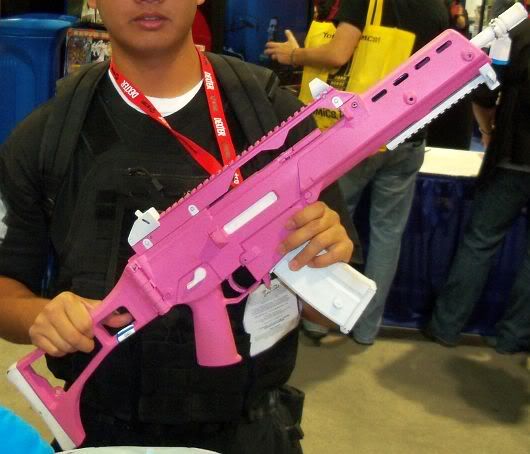
Pink Hello Kitty Assault Rifle with folding Stock

San Diego, July 25 – After four days of convention madness, the weariness began to show on the faces of the exhibitors and guests. I could see it in their eyes. They had the thousand yard stare. We braced ourselves for the final day of total geekery. Some poor souls had to buy overpriced coffee from the Starbucks stand. Others just toughed it out without caffeine. Go forth, brave soldiers of love.

Comics and Piracy Panel


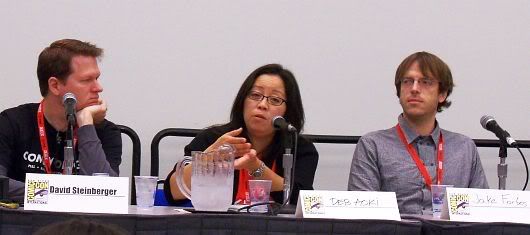
Right to Left: Jake T. Forbes, Deb Aoki, and David Steinberger

The Digital Piracy Panel was one of the few panels that I actually attended. They covered most of the major arguments concerning comic books and intellectual property rights. The discussion was very timely due to the recent anti-piracy efforts of many American manga publishers.

Thursday, August 5, 2010

SDCC 2010: Con Survival, Pop Candy Party, and Boris


San Diego, July 24 – I always assumed that con survival guides were weak veiled attempts at comedy. Come on… Do you really need someone to remind you of basic human functions like hygiene, hydration, and eating? It’s basic common sense. Even mindless Sims sprites know when to use the bathroom.

Then, the unthinkable happened. There was geek-on-geek violence in Hall H of the San Diego Comic-con. Stationed at the plushy table of the Giant Robot booth, I watched two squads of local police quickly marching across the convention center.

I’ve read quite a few con survival how to’s, and I don’t recall any lessons on self-defense (the zombie apocalypse ones don’t count). I guess it’s time to add some basic self-defense tips to those guides.

There were many rumors circulating in the exhibitor’s hall. The initial story described a confrontation ending in an attendee stabbing another one with a replica light saber (the geek’s weapon of choice). It’s perhaps the geekiest personal assault in history. When I read the actual news coverage, the victim was stabbed by a pen near his eye. He went to the hospital with minor cuts.

Thursday, July 29, 2010

SDCC 2010: Friday Comes In Like a Lion and Goes Out Like a Munko


Bill Poon

San Diego, July 23 – The morning started with a surprise visit from Bill Poon who is the All-Star slugger from the Giant Robot softball team. He briefly chatted with Eric Nakamura (Publisher, Giant Robot) and others.

Second David Choe Signing


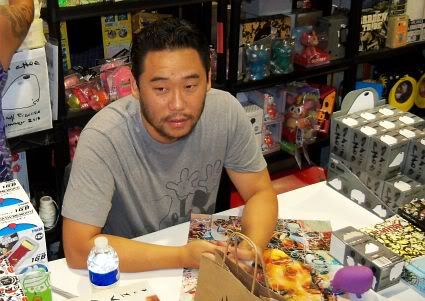
Dave Choe

Just before noon, fans of David Choe began forming a line around the booth. Choe, a Los Angeles pop artist, arrived to sign merchandise including his new art book and Munko vinyl figures. His devoted fans were pretty excited to meeting him. One of them even showed me her Munko tattoo on her wrist. It was pretty awesome.

Wednesday, July 28, 2010

SDCC 2010: Crossroads and Connections


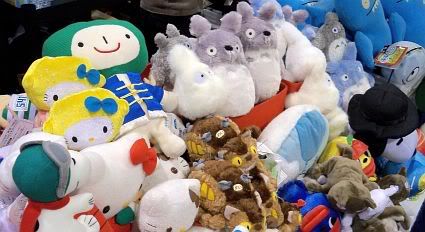
Plushy Stand at the Giant Robot booth

San Diego, July 22 – The San Diego Convention Center opened its doors for the first full day of Comic-con International. Standing behind the plushy Totoro (トトロ) dolls at the Giant Robot booth, I was prepared for the onslaught of attendees.

First David Choe Signing

Our first major event was a signing by David Choe. Choe has been a major artist and painter in the Los Angeles art scene for the last several years. His pop sensibilities and graffiti style artwork has garnered a huge following among both art collectors and street artists. It’s a balancing act that keeps Choe's work on the cutting edge of the avant-garde.


Line for Dave Choe signing

Even before Choe’s arrival, his fans were lining up for the event. They were eager to chat with the artist and get their stuff signed.

Saturday, April 17, 2010

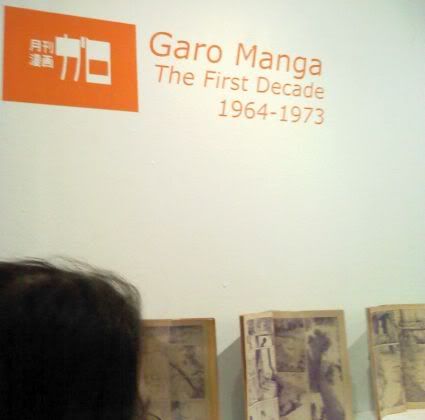
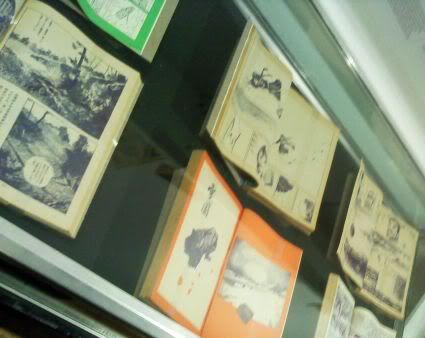
Garo: The First Decade (1964-1973)


NEW YORK, April 14 — The Center for Book Arts held a gallery opening for an advent-garde manga magazine called Garo (ガロ). Garo is famous for launching the careers of many famous mangaka such as Yoshihiro Tatsumi (辰巳 ヨシヒロ), Sanpei Shirato (白土 三平), and Ryoichi Ikegami (池上 遼一). It also influenced modern storytelling in Japanese comics with titles that took a more mature approach to sequential art. Some manga readers claim that it paved the way for genres like Seinen manga (青年漫画) and Gekiga (劇画).

Garo started in 1964 as a small indie manga magazine. Katsuichi Nagai, the founder of the magazine, wanted to create an advent-garde publication that focused on progressive and experimental modes of storytelling. Unlike other manga anthology magazines, Garo was never categorized under a particular genre. Rather the magazine went through many different periods as it grew and changed.


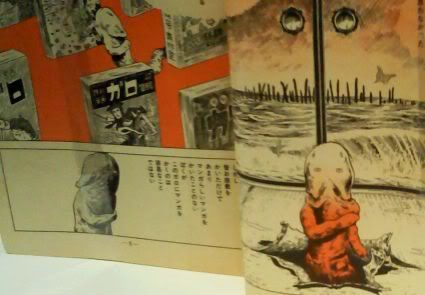
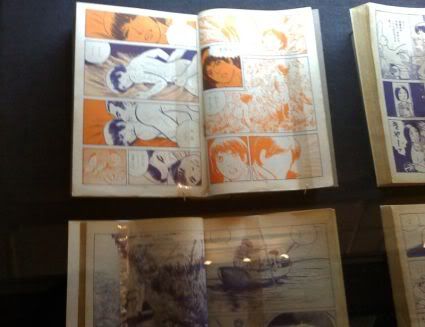
The exhibition was held in a very small gallery space which filled up pretty quickly. Moreover, I was surprised that parents brought their young children to the gallery opening, because some of Garo’s content is extremely violent and sexual in nature. I can only assume that the parents equated comics with kid safe. This is obviously not the case. There were some extremely violent and pornographic manga panels on display. For instance, one Garo spread featured a talking phallus. This is definitely not for toddlers.


Talking Phallus

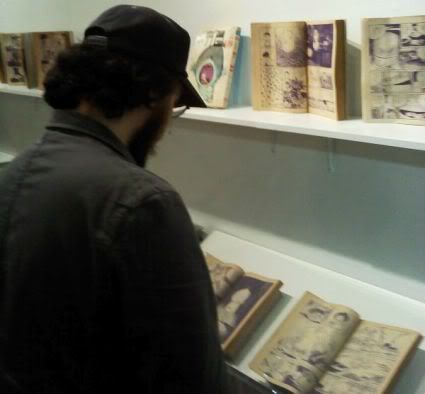
Most of the magazines were behind glass or displayed as an installation piece. I had to fight the urge to grab one and flip through it. It’s an old tachiyomi (立ち読み) habit.

The first section of the exhibit was devoted to Sanpei Shirato’s The Legend of Kamui which is probably their most widely read manga title. The Legend of Kamui is about a ninja who discovers the class struggle and discrimination of Edo period Japan. The historically based manga became a platform for the Shirato’s leftist political ideology.


Ryoichi Ikegami display

Another interesting section was Ryoichi Ikegami section. It featured some of his early work before his amazing collaborations with Kazuo Koike (小池一夫). It’s interesting to see the early development of his hyper realistic art style.

Goseki Kojima (小島 剛夕), another Koike collaborator, also had a small section in the exhibit. He is renowned for his artwork in Lone Wolf and Cub (子連れ狼).

Towards the back of the gallery, I found a small section devoted to Yoshihiro Tatsumi. Credited as the father of the gekiga movement, Tatsumi’s section had some very racy material. Due to the amazing translation efforts at Drawn and Quarterly, I am very familiar with Tatsumi’s violent and socially dissociative storytelling. However, one of his Garo spreads had some hardcore incestuous gay sex scenes. I was unaware that he published LGBT material. The artwork was very similar to current Bara manga.


Yoshihiro Tatsumi display

The exhibition showcased Garo’s importance in the development of modern manga storytelling. Even though it was never as popular as other mainstream magazines, it managed to influence the entire industry and launched the careers of many notable mangaka.

Related Links:

Wednesday, February 10, 2010

Lowboy and Black Blizzard


Lowboy Cover Art by Adrian Tomine

NEW YORK, February 4 – In a promotional event for his new novel, John Wray conducted a book reading and discussion at the powerHouse Arena in Brooklyn.

Lowboy, Wray’s latest novel, is centered on a paranoid schizophrenic teenager who’s recently escaped from a mental institution. Interestingly the narrative of the novel is told through the eyes of a boy suffering with mental illness, and the story frequently blurs the line between reality and fantasy.

After a brief reading, Wray was joined by Adrian Tomine. Tomine, a popular cartoonist, did the illustrations for the cover of Lowboy. Using a set of prepared questions as a jumping off point they discussed a variety of topics including possible movie adaptations, the creative writing process, and their collaboration on the novel’s cover art.


Adrian Tomine and John Wray

Towards the end of the night, I had an opportunity to talk with Tomine, and we got into a discussion about manga. He mentioned that he had just finished editing Yoshihiro Tatsumi’s (辰巳 ヨシヒロ) Black Blizzard (黒い吹雪). It’s a follow up to Tatsumi’s critically acclaimed graphic novel A Drifting Life. He described it as Tatsumi’s attempt to incorporate elements of film noir into his manga. As an avid reader of Tatsumi’s work, the news of a new graphic novel was very exciting.


Related Links:

Friday, October 23, 2009

Queer Manga at NYU


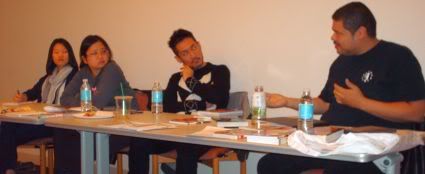
Panel: (Left to Right) June Kim, Mari Morimoto, Hiroki Otsuka, and Ivan Velez

NEW YORK, October 21 – Erica Friedman, the President of Yuricon and ALC Publishing, moderated an interesting panel on Queer Manga. The event was being hosted by the Lesbian, Gay, Bi-Sexual, and Transsexual (LGBT) Office at New York University (NYU) as a part of their LGBT Pride Month. The panelists consisted of Ivan Velez Jr. (American Comic Book Artist), Hiroki Otsuka (Japanese Managaka), Mari Morimoto (Manga Translator), and June Kim (Korean Comic Book Artist).

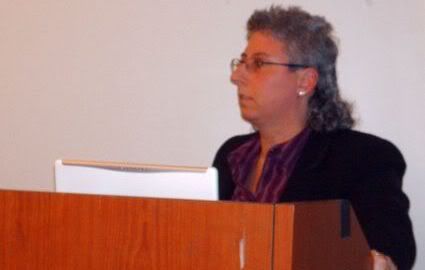
Friedman began the panel with a quick summary of LGBT manga, which was extraordinarily helpful to a majority of the college students in the audience. She quickly defined of terms like Yuri, Yaoi, Boys Love, Girls Love, Bian, and Bara. Then she went into a brief history of LGBT manga from 1923 to the present. It was impossible for Friedman to cover everything due to time constraints, but she managed to do a brilliant job giving the abbreviated Cliff Notes version. She covered a variety of topics like Riyoko Ikeda’s (池田 理代子) Claudine...! (クローディーヌ...!), Yuri Shimai (百合姉妹) Magazine, and Eriko Tadeno's Works.


Erica Friedman (Moderator)

Following Friedman’s introduction, the panelists discussed their personal experiences with creating and publishing LGBT manga and comics.

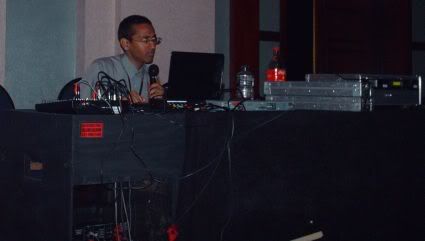
Ivan Velez demonstrated the varying degrees of gay manga. Velez began his portion of the panel with a home video of his trip to Akihabara. The video mainly focused on his exploration of gay manga stores. He showed the different types of stores and sections selling both the lighter gay manga titles and the more graphic gay material. After the video, he did a quick introductory slideshow of works from famous Bara mangaka such as Jiraiya. Velez argued that the genre was very masculine and sweet at the same time.

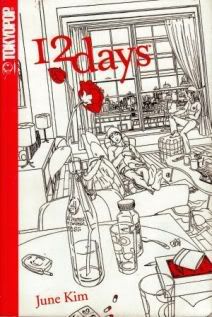
On a different note, June Kim talked about her experiences while working on the 12 Days manga. She said it was based on a real life story of tragedy and loss. Surprisingly TokyoPop, her publisher, did not have any problems with the openly lesbian and gay themes in the book. According to Kim, she never received any restrictive guidance or prohibitive directives from her publisher. This freedom allowed her to create an amazing manga with stunning artwork and a touching storyline. 12 Days was well received, and many of Kim’s readers tell her that the story literally moved them to tears.


12 Days by June Kim

Hiroki Otsuka discussed his transition from straight sex manga for young women to his open gay titles for gay men. He related his experience to the greater LGBT movement in Japan. He stated that Japanese society is still very conservative, and many gay mangaka don’t publicly declare themselves as gay or lesbian. There is still a heavy stigma attached to being openly gay. Kim interjected that the “don’t ask, don’t tell” policy is a very common phenomenon in most Asian cultures. Otsuka also discussed the slow growth of the gay community in the Second Street section of Akihabara. This burgeoning community of openly gay Japanese has led to the creation of two different groups: one group of Japanese leading openly gay lifestyles and another group of gay Japanese leading outwardly straight lifestyles. This stratification has created two divergent lifestyle philosophies concerning sexual identity in Japan.

In her portion of the panel, Mari Morimoto talked about the difficulties in publishing LGBT manga. She said that, “the publishing industry is very conservative.” The manga industry is not an exception. There are obstacles ranging from printing to distribution in regards to LGBT titles. In her efforts to promote and support LGBT works, Morimoto discussed her involvement with Prism Comics and LGBT manga panels at various anime conventions.

On the whole, Friedman successfully created an open atmosphere that allowed the panelists to share very personal experiences regarding LGBT manga. The audience seemed to appreciate the candor and honesty of the panelists and their discussion.

Related Links:

Tuesday, September 22, 2009

Anime Weekend Atlanta (AWA) 2009: Part 2: I Only Meant to Stay Awhile


Panel of Doom hosted by Daryl Surat

ATLANTA, September 20 – On the second day of the AWA, I slept in a little. I was tired from the previous day’s travel and didn’t get much rest. I rolled out of my hotel room late in the afternoon to attend Gerald Rathkolb’s (Anime World Order (AWO) host) panel.

He was hosting a panel on AIC in the 80s. Anime International Company (AIC) is an animation studio which produced many beloved OAV titles in the 1980s. Many of the OVA titles made their way to local video rental stores like Blockbuster spawning a new generation of anime fans. Gerald showed trailers from shows like Cybernetics Guardian (聖獣機サイガード), Gall Force 2 - Destruction (ガルフォース2), and Madox-01 (メタルスキンパニック MADOX-01). It was a nostalgic trip through my childhood anime fandom.

At the panel, I unexpectedly bumped into Ed Chavez, Marketing Director for Vertical, Inc. I was completely surprised. I didn’t think he was going to attend this convention. He said that it was a last minute decision. We talked for a bit and made our way to Daryl Surat’s (AWO host and Otaku USA writer) panel. There was some confusion. The time of the panel was pushed back, but there was very little notice in the schedule (except for some fliers in the hallway).

Daryl hosted the Panel of Doom which is a hilarious mash up of anime, live action, commercials, and documentary footage. I’ve seen the Panel of Doom in past anime conventions, and Daryl managed to keep thing fresh by incorporating new videos.


Falling Curtain, Panel of Doom

In the middle of his panel, a large curtain accidentally fell on audience members in the back of the room. It was dangerous because the curtains were attached to large metal poles. Daryl briefly stopped the panel as people were trying to fix the curtain. It was a surreal experience.

After Daryl’s panel, a group of us went to grab a quick bite at the Cumberland Mall’s food court. We rushed back to the convention because Clarissa Graffeo (AWO host and Otaku USA writer) and Gerald had to set-up their Doujin panel.

Gerald and Clarissa’s Doujin panel was an over 18 affair because of all the adult material notoriously associated with doujinshi (同人誌). Doujinshi refers to a wide array of original fan made products related to manga and anime. They covered a lot of material including games, prose fiction, manga, and music.

After the panel, a small group consisting of audience members and panelists talked about doujinshi. The group included: Carl Gustav Horn (Dark Horse Manga Editor), Clarissa, Gerald, Ed, Max, and others. We discussed a variety of topics ranging from Japanese cultural history to the Otaku phenomenon. The group was very nomadic. We moved around to several locations and continued our conversations while walking around the Renaissance Waverly Hotel.

Eventually, we settled down at a table in the atrium. Shortly after Daryl joined us, a security guard walked over to our table and told us that the atrium was closing. Clarissa looked at her watch and remarked that, “its 3:30.” I don’t think anyone realized how long we were talking. I went back to my hotel room and slept.


The Anime Treasure Chest Panel hosted by Tim Eldred

The next morning Ed and I went to Tim Eldred’s Anime Treasure Chest panel. He started the panel in grand fashion with the Daicon IV opening film. The Daicon IV film was an amateur piece of animation created by members of Gainax (株式会社ガイナックス) before they became a professional studio. It was seminal film in anime history. Tim also showed some amazing scenes from the revamped Fist of the North Star (北斗の拳) series. It was a chock-full of awesome. The high budget animation was pretty amazing. I need to get copies of it. Towards the end of his panel, he showed an anime UFO documentary. It was quite bizarre. I need to ask Tim more about it.

Then we attended Clarissa’s Black Jack panel. She did a basic introduction to the manga and anime series. I was amazed that her panel was well attended. Usually panels covering older anime and manga properties have smaller audiences because most younger fans don’t follow older work. I was pleasantly surprised at the turn out.

After her panel, Clarissa and I went over to Carl’s Evangelion panel. He started with a quick rundown of future Dark Horse releases. Smoothly he transitioned into the different Evangelion titles being released by Dark Horse. He talked about his theories regarding the Eva story arc and the multiple endings. The crowd seemed excited. There was a pretty active back-and-forth conversation between the host and the audience.

I briefly joined Daryl at Tim’s Star Blazer (宇宙戦艦ヤマト) panel before rushing over to Ed’s Vertical panel.


The Vertical Panel hosted by Ed Chavez

During his panel, Ed talked about the variety of releases by Vertical Inc. He mentioned some of the Osamu Tezuka (手塚 治虫) releases such as Black Jack and Dororo (Winner - Will Eisner Award for Best U.S. Edition of International Material). He also promoted Vertical’s non-manga release such as Tetsuya Nishio's Sudoku Plus series, Kentaro Kobayashi's Easy Japanese Cooking series, and Toshio Okada's Sayonara, Mr. Fatty!: A Geek's Diet Memoir.

After his panel, Ed and I ended the convention by attending a viewing of Dave Merrill’s Ozone Commandos. It’s a campy fan produced sci-fi adventure movie. I thought it was pretty wild and filled with tons of geeky references.

Tuesday, June 30, 2009

Jim Hanley's LGBT Pride in Pix and Panels.


NEW YORK, June 27 – Jim Hanley's Universe (4 West 33rd Street) hosted a long afternoon of events celebrating Lesbian, Gay, Bi-Sexual, and Transsexual (LGBT) in the comic book industry. It was scheduled to coincide with the eve of the 40th anniversary of the Stonewall Rebellion. Erica Friedman, the President of Yuricon and ALC Publishing, moderated the panels.

Panelist included: Tony Arena, Amy Colburn, Foxy Andy, Rica Takashima, Abby Denson, Jennifer Camper, Steve MacIsaac, JD Glass, Allan Neuwirth, Ivan Velez, José Villarubia and others.

The panel covered many important issues challenging comic book creators and publishers.

Selling Out

One of the most interesting topics addressed is artistic freedom versus commercialism. Some of the panelists talked about their experiences with working for either Marvel or DC Comics. They addressed the corporate mind set and the commercial aspects that require hard time lines, high quality product output, and editorial controls.

Some audience members tried to frame the discussion as a big corporation versus the struggling artist argument (“creative freedom versus editorial decisions”). Some of the panelists tried to stem the argument. They put the issue into the greater context of market realities and the costs of production (printing, marketing, and employees). They further tried to dispel any notions that “business” is inherently evil. Villarubia insists that business a tool or vehicle to help sell and distribute comics to a wider audience regardless of the publishing type.


Independent Publishing and LGBT

Many of the panelists have vast amounts of experience in self-published comics and independent comics. They emphasized the guerilla tactic of “picking your battles”. Attending several smaller comic book conventions might be a better strategy than going to a few larger ones. They also pushed the idea of self-promotion and marketing as one of the key pillars to small run publishing.

The panel also addressed the difficulties of LGBT titles and books in the mainstream comic book market. They humorously discussed the “running away” phenomenon at conventions. Many straight people are attracted to tables with LGBT books because of the art or the title of the book. When they discover the book is a LGBT work, they usually drop the book and run away. Friedman witnessed the same “running away” behavior at Comiket (コミケット) in Japan and the New York Comic Book Convention (NYCC).


Rica Takashima

Overall, the panel encouraged engaging debate and discussion. Erica Friedman’s knowledgeable input and frank manner helped to guide the panel and the audience through a vast array of topics concerning LGBT comic book creators and independent publishing.

Related Links:

Monday, June 9, 2008

MoCCA Art Festival 2008: Plympton, Tomine, Bruce Lee vs. Jesus, and Freddie Mercury's Gravity


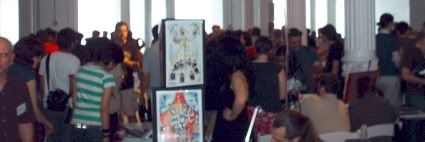
First Floor of the MoCCA Art Fest

NEW YORK, June 7-8 — The Museum of Comic and Cartoon Art’s Art Festival is one of the biggest gatherings of independent comic book creators in the United States of America. The festival is professionally sponsored and run by the Museum of Comic and Cartoon Art (MoCCA). Except for the programs, most of the festival was held at the Puck Building (295 Lafayette Street), which is around the corner from the actual museum (594 Broadway).

The MoCCA Art Festival is difficult to describe to the uninitiated.

If you have anime con experience, it kinda like an anime convention, but the emphasis is largely focused on the huge dealer’s rooms. This year’s festival filled two floors with dealer’s table. It was pretty massive and packed to capacity. The festival organizers did schedule a decent program of events at the museum, but most people don’t attend this festival for programs. They go mostly for the dealer’s room.
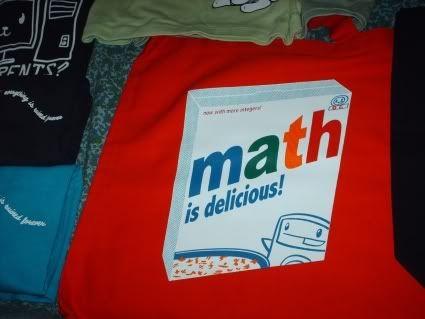

In some ways, it’s like Comiket. All the tables are filled with comic book circles, small press, and individual comic book artists. They sell everything from quirky t-shirts to photocopied comic books zines.

Unlike Comiket, most of the independent comic books are original works with original characters, and only a small percent of the material is outright pornographic.

Most of the merchandise is humorously clever and very appealing to the young hipster zeitgeist.
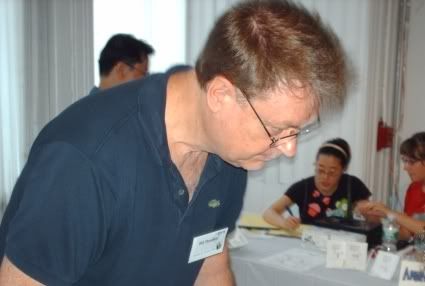

Bill Plympton

As soon as I paid my admission, the first table I notice was the great Bill Plympton. I’ve been a big fan of Plympton since watching his cartoon shorts on MTV’s Liquid Television (1991). His humor was eye opening in the early nineties. At the festival, he had a small white table with his books and DVDs. He took the time to sign and sketch something for each fan. I’m not an autograph collector, but I let him sign my graphic novel anyway. At first, I didn’t know what to say… I was at a loss for words. I just said, "I'm a big fan." It was just awesome to talk to him.
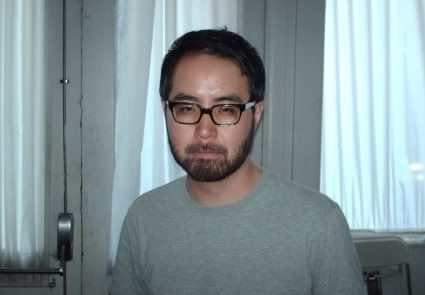

Adrian Tomine

I walked around the first floor for a bit, and I recognized Mister Adrian Tomine, comic artist for the New Yorker Magazine. He was at the Drawn and Quarterly table. I got a chance to talk with him. I immediate apologized for missing his gallery show for Shortcomings at the Giant Robot store in New York. He was totally cool about it. After a few minutes of talking, I discovered that we shared some mutual friends at Giant Robot Magazine.

I picked up a few issues of Tomine’s Optic Nerve (Issues 9, 10, and 11). I love his art style. He has very clean line work. If you get the chance to pick-up Optic Nerve and Shortcoming, definitely buy it. It’s a good read.
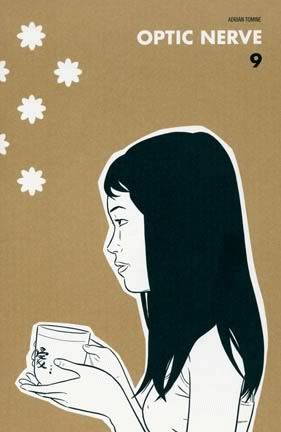

While at the Drawn and Quarterly table, I also picked up the hard cover printing of Yoshihiro Tatsumi’s The Push Man and Other Stories and Abandon the Old in Tokyo. WARNING: Tatsumi was the godfather of Gekiga, therefore it might not be appropriate for children or the weak-at-heart.

Anime World Order’s Daryl Surat did an excellent review of The Push Man and Other Stories in his podcast. I picked it up based on Daryl's recommendation. You can find his review here.

After I bought a few more comics, I headed upstairs to the seventh floor of the Puck Building. I immediately saw the hand drawn sign, "Bruce Lee vs. Jesus". Peter Quach, the creator, was selling You Don’t Know Much About Jesus. The book was an eight page photocopy comic, and it prominently features a fight between Bruce Lee and Jesus. The mere concept of Bruce Lee fighting Jesus was pretty awesome. The comic was only a dollar, so I had to buy one.
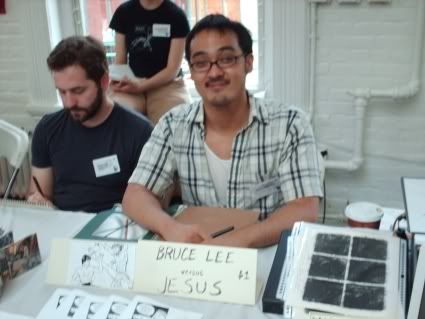

Peter Quach and his "Bruce Lee vs. Jesus" sign

Right next to Quach, a table was selling pretty awesome t-shirts. I didn’t pick one up because I wanted to save my money for actual comics and graphic novels. But, I did take a few pictures:
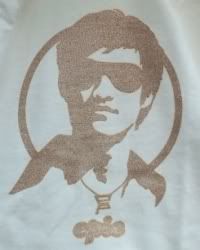
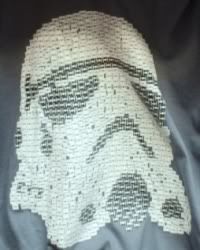
Left: Bruce Lee T-Shirt, Right: Star Wars Stormtrooper T-Shirt (made up of tiny TIE Fighters)

I walked around the floor and picked up a few more comics and graphic novels. I took the elevator back to the ground floor and made another sweep of those tables.

I was near the Freddie and Me table. Come to think of it: I should have picked up a Freddie and Me book. It looks awesome. I didn’t buy it. Anyway, I was pulled by the gravitational force of the Freddie Mercury’s statue. It was like a beacon calling me home.
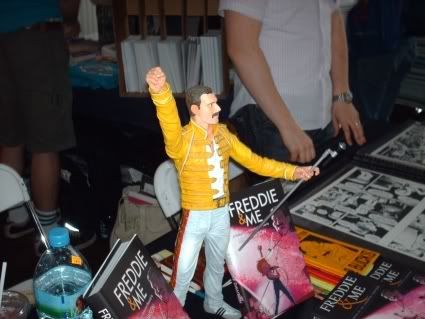

The gravitational pull of Freddie Mercury

As I got closer to Freddie, I bumped into the goddess of pop culture journalism, Whitney Matheson. Whitney writes "Pop Candy", which is a popular column/blog in USA Today. She is also frequently quoted on television and in-print. I’ve been reading her column since the late 90s, and I hold her opinion about pop culture in the highest regard. She continues to be one of my top three favorite bloggers.

Whitney mentioned that she was going to be at the festival on her blog, so I e-mailed her about it. When I ran into her, she had an arm full of comics. We talked a little bit about her blog and about the festival. The conversation strangely segued into a conversation about her footwear. She wore her signature Chuck Taylor All Star Low Top Converse sneakers. She said that they were a bit uncomfortable. I thought they were completely "punk".

(Post-Editorial Note: Whitney Matheson interviewed Mike Dawson, author of Freddie and Me. Podcast: A glimpse inside 'Freddie & Me')
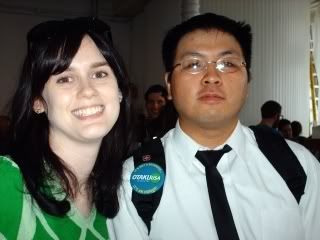

Whitney Matheson and me

Due to a scheduled dinner and a greatly weakened bank account, I had to leave the MoCCA Art Festival. I said goodbye to Whitney and left. It was totally awesome to meet her. She is one of the coolest chicks that I’ve ever met.

Partial List of Comics that I Picked-up at the MoCCA Art Festival:
Casson, Ronnie. Claviger (Issue2)
Del Rio, Tania. Knit Wits.
Epic Proportions. Burn
McMurray, Mark. Dumb Jersey White Boy (No. 1)
Plympton, Bill. We Eat Tonight
Quach, Peter. You Don’t Know Much About Jesus
Student Press Initiative. Manga Mania
Tatsumi, Yoshihiro. Abandon the Old in Tokyo
Tatsumi, Yoshihiro. The Push Man and Other Stories
Tiede, Dirk I. Paradigm Shift, Part One
Tomine, Adrian. Optic Nerve (Issues 9, 10, 11)
Ward, William. Fablewood Anthology

Related Links: