The Random Access Information Blog has moved to a new URL address. You can find new posts at: raiwebs.com
Showing posts with label Chinese Cinema. Show all posts

Thursday, August 19, 2010

NYAFF 2010: Photographic Evidence


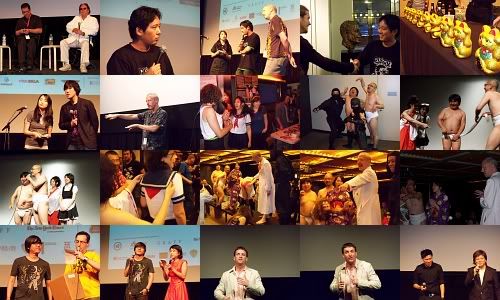
New York, July 8 – During the 2010 New York Asian Film Festival (NYAFF), I took hundreds digital photographs and several digital videos. I promised the Subway Cinema guys to post them, but my life got really busy. The images just sat on my hard drive for nearly a month until I could find the time to sort them. I compiled best ones for this photo essay post.

Except for the photographs attached to other blog posts, these are some of my favorite photos from NYAFF 2010: [Click Through Image for Higher Resolution]

Wednesday, July 21, 2010

NYAFF 2010: Calloused Fists of the Beast


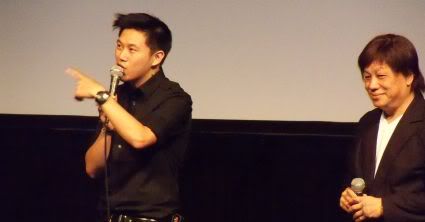
Right to Left: Bruce Leung and MC Jin

NEW YORK, July 8 -- On the closing day of the 2010 New York Asian Film Festival (NYAFF), they featured a retro-kung-fu flick named Gallants. It was a return to the original Hong Kong Kung-fu feature with tonue-in-cheek references to the old school classics.

Executive produced by Andy Lau (劉德華), the film features several old school kung-fu stars such as Bruce Leung Siu-Lung (梁小龍) and Chen Kuan-tai (陳觀泰). They are joined by some younger cast members such as Wong Yue-nam(黄又南) and MC Jin (歐陽靖).

Tuesday, June 29, 2010

NYAFF 2010: Saturday with Sammo


NEW YORK, June 26 – I missed the opening of the 2010 New York Asian Film Festival (NYAFF), so my first impression of this year’s festival started with the screening of Eastern Condors (東方禿鷹).

Eastern Condors is a particularly special film to my generation of Hong Kong film fanatics. I was first exposed to the film in the early 90s. I was probably a ‘tween at the time. I remembered watching the film on a poor grainy VHS tape with bad tracking. So the prospects of seeing it on the big screen were very exciting to me.

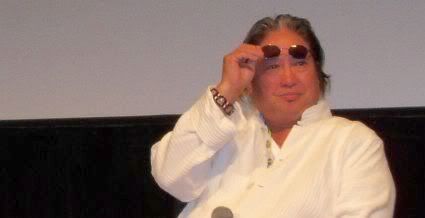
After the film, Sammo Hung (洪金寶) participated in a short Q&A with the folk at the NYAFF. They discussed a variety of topics concerning the making of the film. Hung appeared visibly tired, but he heroically powered through the appearance. The kung-fu legend even acted out some of the behind the scenes stories. He seemed both warm and gracious to his fans.

A real treat for the audience was the surprise appearance of Joyce Godenzi (高麗虹), who is Hung’s wife. She was the lead actress in Eastern Condors and several other kung-fu flicks. Godenzi initially gained public attention as a former Miss Hong Kong and fashion model. She parlayed her successful modeling career into a decade long Hong Kong film career. She starred in some memorable martial arts films such as She Shoots Straight and License to Steal. Despite her age, Godenzi is still stunningly beautiful (minus the short 80s hairdo). I was hoping that she would participate in the Q&A, but sadly she didn’t.


After the Sammo Hung Q&A, I stuck around the theater until the screening of Kung-fu Chefs. It’s another Sammo Hung film of a more recent vintage. While waiting for the screening to start, I unexpectedly ran into a bunch of friends from other blogs, podcasts, and local anime clubs. They were pretty chill.

Related Links:

Monday, April 5, 2010

The Last Video Rental Store


JERSEY CITY, April 5 — The last local video rental store in my neighborhood is finally closing its door after nearly twenty years. It’s the latest victim of digital media and high speed internet distribution. It’s quite sad really. I spent most of my formative years renting VHS cassettes.

As soon as my dad bought our first Panasonic VCR, I remember spending most of my childhood walking the narrow aisle of the video store looking for interesting VHS tapes. It was only a dollar to rent a single VHS for a day, and it was a bargain.

I frequently rented martial arts, horror, and crappy B-movies. It’s an informal film education that shaped my taste as moviegoer. I spent my younger days watching rented movies like Chinese Connection, Blood Sport, Dracula Versus Frankenstein, Swamp Thing, and Godzilla 1985 (ゴジラ). According to my Netflix queue, my taste in movies hasn’t really changed much… Jeez.


In the early 1990s, I rented some of the first anime titles legally released by Central Park Media, AnimEigo, U.S. Renditions and Streamline Pictures. Most of the releases were OVAs like M.D. Geist, Bubble Gum Crisis, Appleseed, and Gunbuster. I also remember the anime section being labeled "Japanimation". Along with a local tape trading circle, the video rental store became a good source for my voracious anime addiction.

As I walk past the last local video rental store, it was holding a huge "going out of business" clearance sale for all their DVDs. Regular feature film DVDs were priced at $8.29, and Anime DVDs were going for $2.88 each. I'm going to miss it.

Saturday, January 30, 2010

REVIEW: Bodyguards and Assassins


NEW YORK, January 30 – Is it me or is Donnie Yen bucking to be the next national hero of Hong Kong? Maybe he’s starting with Hong Kong and shifting to be a national hero of China. It sure seems like it.

Yen’s recent acting filmography includes Ip Man (葉問), The Founding of a Republic (建國大業), and Bodyguards and Assassins (十月圍城). He is also set to release Ip Man 2 (葉問2) later this year. Interestingly these films have all been historically based fictions with an emphasis on individual heroism and valor.

Some film critics argue that Yen is treading dangerously close to Chinese Communist propaganda in his recent pictures. I wouldn’t go so far as to label his films as propaganda, but they are very careful in their handling of modern Chinese history. It’s a soft touch that is not characteristic of the fast paced Hong Kong film industry.

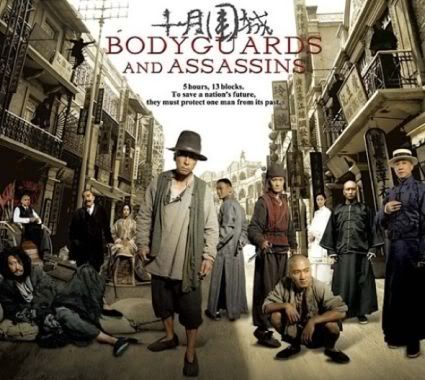
Yen’s current film, Bodyguards and Assassins, tries to carefully reshape Chinese history with varying degrees of success.
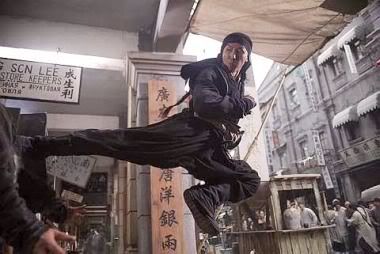

The film is mainly centered on the arrival of Sun Yat-sen in 1905 Hong Kong. Sun plans to unite the various rebellious Chinese factions in order to overthrow the troubled Qing dynasty, and the royal court responds with a group of highly trained assassins (ninja?).

Donnie Yen plays a crooked police officer in the burgeoning Hong Kong police department. As a gambling addict, he constantly finds himself broke and desperately looking for side jobs to cover his addictive habit. As a thug for hire, he sometimes takes jobs that are morally questionable. Over the course of the film, Yen’s character has a change of heart and decides to protect Sun Yat-sen with a heroic band of outcasts, homeless, and destitute individuals.

The film can easily be bifurcated into two halves. The first half is the introduction segment which provides the various background stories for each hero and villain. The second half of the film is dedicated to the action packed chase and fighting sequences between the various characters.
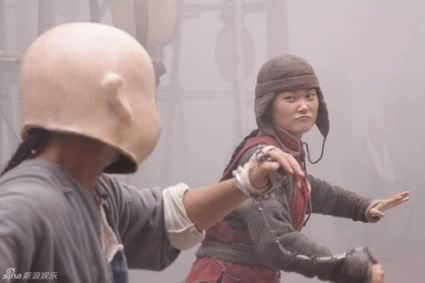

The first half is pretty long (almost an hour) and suffers from a lot of pacing issues. It jumps from one character background segment to another character segment without any sense of order or rhythm.

However, Sun’s arrival to Hong Kong changes everything. The tempo picks up and the rest of the film is a high paced sequence of chase and fight scenes. The frenetic nonstop movement is the hallmark of Hong Kong cinema, and the kung-fu is pretty top notch with Yen showing off his amazing skills.

Some of the best acting performances in the film were delivered by Tony Leung Ka-Fai (梁家輝). He brought serious acting chops to the role, but some of his counterparts lacked the same skill. It was like watching a tennis pro play with a teenage amateur.
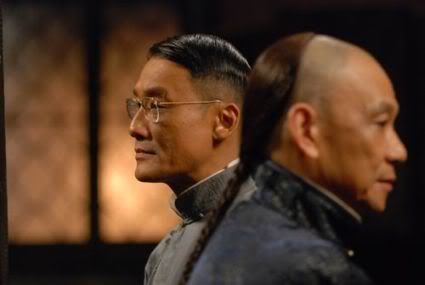

Eric Tsang (曾志偉) also had a small side role as the police chief. His limited on screen time was funny and delightful. He lightened the mood during some of the most depressing moments of the story.

On a negative note, the film attempts to hand jam a nationalist allegorical message throughout the narrative which I found a little distracting. It wasn’t a subtle nudging… more like a slap in the face. Jeez… I get it: patriotism and equality. I felt like a customer being subjected to some hard selling by a used car salesman.

If you could bear with the long introductory exposition, Bodyguards and Assassin will take you through an amazing journey of unlikely heroes and fascinating villains.

Related Links:

Sunday, December 20, 2009

REVIEW: Storm Warriors 2


HONG KONG, December 19 – I know that the blog has been taken over by food posts recently, and I have not really blogged about pop culture. Fear not! In addition to eating my way through the streets of Southern China, I also watched a good deal of Hong Kong cinema.

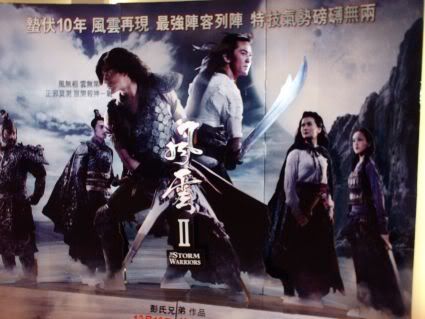
As a pop-culture addict, I closely monitor local advertising in particular the giant billboards and posters. There were two movie posters that were plastered on every street corner in Hong Kong. The first one was James Cameron’s Avatar 3D movie, and the other was Storm Warriors 2.

Based on a Hong Kong manwha, Storm Warriors 2 is a highly styled film that uses a lot of CGI to enhance the elaborate action sequences. Some of the larger scale battles blatantly rip-off the 300 movie with high contrast cartoonish CGI-enhancements. The Pang Brothers, the directors, reportedly admitted to cribbing off of the Zack Synder film.


The story follows the basic Shonen Fighting format with the bad guy being nearly invincible and the good guys training to defeat him. It’s simple enough that you can sit back and enjoy the CGI-enhanced visuals without worrying about all of the plot holes. The pacing seems pretty decent and the dialogue is very simple. Overall, it’s a high energy PG-13 popcorn movie.

Having never read the manwha, the relationship between the two swordsmen, Wind and Cloud, seems eerily reminiscent of the relationship between Griffith and Guts from the Berserk manga series.

Related Links:

Thursday, October 15, 2009

John Woo's Battle of Red Cliff


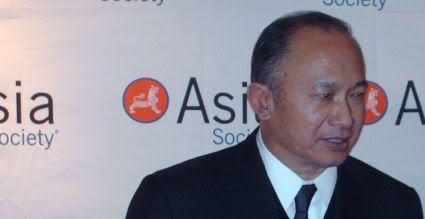
John Woo at the Asia Society's Screening of Red Cliff

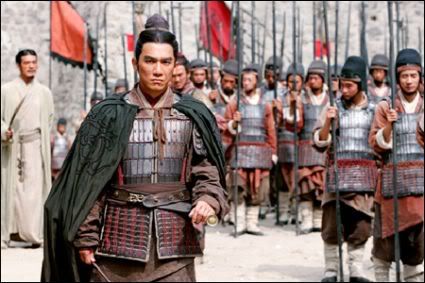
NEW YORK, October 12 – John Woo is one of the most influential directors in Asian cinema. Most audiences will recognize his highly stylized gun fights in Hong Kong films like A Better Tomorrow (英雄本色), Hard Boiled (辣手神探), and The Killer (喋血双雄). After several years in Hollywood, Woo returned to China to direct an epic film appropriately named Red Cliff (赤壁). Red Cliff is based on the historical Battle of Red Cliff set in the early part of the Three Kingdoms period in Chinese history.

James Leung: In your career, there have been phases. You started with Kung-fu films. Then you went into gangster action films and comedy. Red Cliff is an epic. Is this a start to a new era of epics?

John Woo: Yes, I think so… From now on, I want to make more epics, more interesting movies, and historical films.

JL: After seeing the full Asian cut of Red Cliff, I noticed that the film has a wide scope. Did you draw any inspiration from other films of the same scale and grandeur?

JW: Seven Samurai (七人の侍) and Lawrence of Arabia.

JL: Red Cliff is your first Asian film since Hard Boiled as a director. It’s been over fifteen years. How has it changed working in Asia as a film director?

JW: I think that things have changed a lot. I must say that I had a great time working in China. It’s so easy today. We have huge support from the government. They all want a very good movie…. You know. I don’t need to take any advice from anyone. I just do my own work.

The movies are much bigger now. We could have a much bigger crew to do much bigger things. And the other thing is we have a long history of our culture. We have so many stories to do… so many stories to tell.

Another thing is that the market is much bigger now. Drawing bigger audiences that like to watch all kinds of movies, which means the government will be more open and really support me. There are also so many talented people in China. Their [artistic] vision is getting better and better.

Making movies in Hong Kong, there is not much in terms of location. Not many topics to do. All you could do is action. In China, you can try many more things.


Special thanks to the Asia Society for their assistance on this interview.