The Random Access Information Blog has moved to a new URL address. You can find new posts at: raiwebs.com
Showing posts with label nostalgic. Show all posts

Wednesday, December 22, 2010

Hong Kong's Sidewalk Comics


Hong Kong History Museum Exhibit of a Comic Book Lending Library

HONG KONG, December 22 – After the Second World War, Hong Kong children used to spend their free time at the local sidewalk comic book lending library. They paid 5-10 cents to burrow a single comic book. The vendors of the library would also set-up a row of tiny benches to accommodated their pint-sized clientele. These kids were hardcore.

Thursday, August 26, 2010

Satoshi Kon: The Dreamer


Paprika

New York, August 24 – On August 24, 2010, Japanese Animation Director Satoshi Kon (今 敏) died of pancreatic cancer in Tokyo.

At the age of 46, Kon left behind an amazing body of work including five feature length films and a thirteen episode animated television series. His innovative storytelling and imaginative animation is unparalleled in complexity and creativity.

As evident in his films, Kon’s imagination and creativity operated on a completely different level from other contemporary animation directors. He constantly blurred the lines between memory, dreams, and reality. In his award winning Millennium Actress (千年女優), the narrative interweaves the colorful flashback segments with the movie’s seemingly mundane plot. The result is a multilayered film seamlessly transitioning back-and-forth between memory and the present reality.


Millennium Actress

Most anime fans of my generation were first introduced to Satoshi Kon through the home video release of Perfect Blue (パーフェクトブルー). The animated feature was about the deceptively innocuous topic of Japanese pop idols that evolved into a serious examination of identity. The film was an innovative work that really opened people’s eyes to the unlimited storytelling potential of 2D animation.

Friday, July 2, 2010

USA Today: Japanese Monster Flicks Make Life Better


NEW YORK, July 2 – USA Today published my on-line article about daikaiju (big monster) movies. It's a guest writing piece for the Pop Candy column. Check it out!

USA Today: Japanese Monster Flicks Make Life Better

Special thanks to Whitney Matheson (the regular columnist) for letting me guest write for her. If you are a pop culture fiend, her daily Pop Candy column is a must read.

Enjoy your vacation, Whit!

Tuesday, June 29, 2010

NYAFF 2010: Saturday with Sammo


NEW YORK, June 26 – I missed the opening of the 2010 New York Asian Film Festival (NYAFF), so my first impression of this year’s festival started with the screening of Eastern Condors (東方禿鷹).

Eastern Condors is a particularly special film to my generation of Hong Kong film fanatics. I was first exposed to the film in the early 90s. I was probably a ‘tween at the time. I remembered watching the film on a poor grainy VHS tape with bad tracking. So the prospects of seeing it on the big screen were very exciting to me.

After the film, Sammo Hung (洪金寶) participated in a short Q&A with the folk at the NYAFF. They discussed a variety of topics concerning the making of the film. Hung appeared visibly tired, but he heroically powered through the appearance. The kung-fu legend even acted out some of the behind the scenes stories. He seemed both warm and gracious to his fans.

A real treat for the audience was the surprise appearance of Joyce Godenzi (高麗虹), who is Hung’s wife. She was the lead actress in Eastern Condors and several other kung-fu flicks. Godenzi initially gained public attention as a former Miss Hong Kong and fashion model. She parlayed her successful modeling career into a decade long Hong Kong film career. She starred in some memorable martial arts films such as She Shoots Straight and License to Steal. Despite her age, Godenzi is still stunningly beautiful (minus the short 80s hairdo). I was hoping that she would participate in the Q&A, but sadly she didn’t.


After the Sammo Hung Q&A, I stuck around the theater until the screening of Kung-fu Chefs. It’s another Sammo Hung film of a more recent vintage. While waiting for the screening to start, I unexpectedly ran into a bunch of friends from other blogs, podcasts, and local anime clubs. They were pretty chill.

Related Links:

Saturday, April 17, 2010

Garo: The First Decade (1964-1973)


NEW YORK, April 14 — The Center for Book Arts held a gallery opening for an advent-garde manga magazine called Garo (ガロ). Garo is famous for launching the careers of many famous mangaka such as Yoshihiro Tatsumi (辰巳 ヨシヒロ), Sanpei Shirato (白土 三平), and Ryoichi Ikegami (池上 遼一). It also influenced modern storytelling in Japanese comics with titles that took a more mature approach to sequential art. Some manga readers claim that it paved the way for genres like Seinen manga (青年漫画) and Gekiga (劇画).

Garo started in 1964 as a small indie manga magazine. Katsuichi Nagai, the founder of the magazine, wanted to create an advent-garde publication that focused on progressive and experimental modes of storytelling. Unlike other manga anthology magazines, Garo was never categorized under a particular genre. Rather the magazine went through many different periods as it grew and changed.


The exhibition was held in a very small gallery space which filled up pretty quickly. Moreover, I was surprised that parents brought their young children to the gallery opening, because some of Garo’s content is extremely violent and sexual in nature. I can only assume that the parents equated comics with kid safe. This is obviously not the case. There were some extremely violent and pornographic manga panels on display. For instance, one Garo spread featured a talking phallus. This is definitely not for toddlers.


Talking Phallus

Most of the magazines were behind glass or displayed as an installation piece. I had to fight the urge to grab one and flip through it. It’s an old tachiyomi (立ち読み) habit.

The first section of the exhibit was devoted to Sanpei Shirato’s The Legend of Kamui which is probably their most widely read manga title. The Legend of Kamui is about a ninja who discovers the class struggle and discrimination of Edo period Japan. The historically based manga became a platform for the Shirato’s leftist political ideology.


Ryoichi Ikegami display

Another interesting section was Ryoichi Ikegami section. It featured some of his early work before his amazing collaborations with Kazuo Koike (小池一夫). It’s interesting to see the early development of his hyper realistic art style.

Goseki Kojima (小島 剛夕), another Koike collaborator, also had a small section in the exhibit. He is renowned for his artwork in Lone Wolf and Cub (子連れ狼).

Towards the back of the gallery, I found a small section devoted to Yoshihiro Tatsumi. Credited as the father of the gekiga movement, Tatsumi’s section had some very racy material. Due to the amazing translation efforts at Drawn and Quarterly, I am very familiar with Tatsumi’s violent and socially dissociative storytelling. However, one of his Garo spreads had some hardcore incestuous gay sex scenes. I was unaware that he published LGBT material. The artwork was very similar to current Bara manga.


Yoshihiro Tatsumi display

The exhibition showcased Garo’s importance in the development of modern manga storytelling. Even though it was never as popular as other mainstream magazines, it managed to influence the entire industry and launched the careers of many notable mangaka.

Related Links:

Monday, April 5, 2010

The Last Video Rental Store


JERSEY CITY, April 5 — The last local video rental store in my neighborhood is finally closing its door after nearly twenty years. It’s the latest victim of digital media and high speed internet distribution. It’s quite sad really. I spent most of my formative years renting VHS cassettes.

As soon as my dad bought our first Panasonic VCR, I remember spending most of my childhood walking the narrow aisle of the video store looking for interesting VHS tapes. It was only a dollar to rent a single VHS for a day, and it was a bargain.

I frequently rented martial arts, horror, and crappy B-movies. It’s an informal film education that shaped my taste as moviegoer. I spent my younger days watching rented movies like Chinese Connection, Blood Sport, Dracula Versus Frankenstein, Swamp Thing, and Godzilla 1985 (ゴジラ). According to my Netflix queue, my taste in movies hasn’t really changed much… Jeez.


In the early 1990s, I rented some of the first anime titles legally released by Central Park Media, AnimEigo, U.S. Renditions and Streamline Pictures. Most of the releases were OVAs like M.D. Geist, Bubble Gum Crisis, Appleseed, and Gunbuster. I also remember the anime section being labeled "Japanimation". Along with a local tape trading circle, the video rental store became a good source for my voracious anime addiction.

As I walk past the last local video rental store, it was holding a huge "going out of business" clearance sale for all their DVDs. Regular feature film DVDs were priced at $8.29, and Anime DVDs were going for $2.88 each. I'm going to miss it.

Thursday, March 11, 2010

The Laughin Nose at The Loft [2009 Back Post]


This post is the last “back post” from 2009. It basically encapsulates my impressions of the Japanese punk scene from my December 2009 Tokyo trip.

Laughin Noses at the Loft

TOKYO, December 27 — Before arriving in Tokyo, I heard a lot about the punk scene and the venue circuit called “Live Houses”. Live Houses are a group of venues that specifically cater to rock acts. For many punk and hardcore rockers, it’s probably the only suitable place to turn up the amps and shred some guitars.

Prior to this trip to Tokyo, I’ve never been to a Japanese Live House, so I had to visit one. After some online research, I discovered a place called the Loft. Located in the western side of the Shinjuku district, the Loft is supposedly the oldest and most well established venue for rock and punk music.

An Osaka punk band called the Laughin Noses was schedule to play. I knew very little about them but decided to go anyway.

I took the Chūō-Sōbu train (中央・総武緩行線) to Ōkubo Station (大久保駅) and walked to the Shinjuku district. It took some looking around to find the venue, and I got lost a couple of times. I finally found the building and a sign with the Lofts’ logo (see picture above). There was a “B2” above the sign which means it’s located in the subbasement (floor underneath the basement). This place is literally underground.

I paid my admission and walked into the subterranean venue. The Loft was grimy enough to remind me of some older New York venues.


The Tokyo punk scene was a trip. They were all dressed like 70s punk rockers. I felt like I step out of a time machine, and my natsukashii (懐かしい) was in full effect. I guess the 80s post-punk period and 90s grunge era skipped Japan entirely.

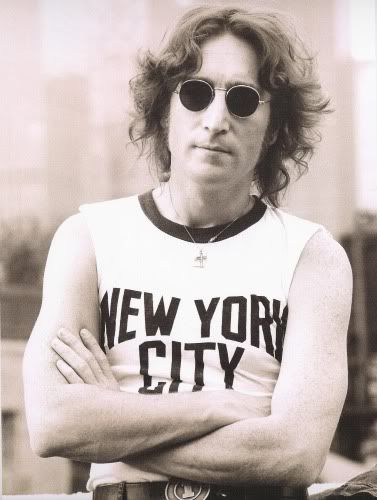
When I took a closer look at their 70s punk gear, the Japanese audience had pristine shiny leather clothing. They wore the nicest punk outfits that I’ve ever seen. At New York punk shows, I’m used to seeing people wear second hand clothes from the Salvation Army. This was a completely different mindset. I guess it’s kinda like cosplay where the fans have to “dress the part.” I also saw a lot of familiar black t-shirts featuring the Ramones, CBGBs, and New York City (à la John Lennon).

According to their Wikipedia entry, the Laughin Noses have been around the Japanese punk scene for near 30 years starting in 1981. Tonight their age didn’t seem to slow them down. They were completely metal on stage and thoroughly rocked the Tokyo crowd. Belley (山崎 健) did some serious guitar work, and Charmy’s (小山 祐) vocals were pretty awesome. His vocal stylings had hints of Johnny Rotten and Joey Ramone.

At several points in the performance, the audience got so rowdy that punches and kicks were flying in every direction. Even the lead vocalist got kicked in the face a few times from overly aggressive body surfers. He continued his performance despite receiving a few blows from the audience.

The Laughin Noses played an excellent punk show.

Related Links:

Tuesday, September 22, 2009

Anime Weekend Atlanta (AWA) 2009: Part 2: I Only Meant to Stay Awhile


Panel of Doom hosted by Daryl Surat

ATLANTA, September 20 – On the second day of the AWA, I slept in a little. I was tired from the previous day’s travel and didn’t get much rest. I rolled out of my hotel room late in the afternoon to attend Gerald Rathkolb’s (Anime World Order (AWO) host) panel.

He was hosting a panel on AIC in the 80s. Anime International Company (AIC) is an animation studio which produced many beloved OAV titles in the 1980s. Many of the OVA titles made their way to local video rental stores like Blockbuster spawning a new generation of anime fans. Gerald showed trailers from shows like Cybernetics Guardian (聖獣機サイガード), Gall Force 2 - Destruction (ガルフォース2), and Madox-01 (メタルスキンパニック MADOX-01). It was a nostalgic trip through my childhood anime fandom.

At the panel, I unexpectedly bumped into Ed Chavez, Marketing Director for Vertical, Inc. I was completely surprised. I didn’t think he was going to attend this convention. He said that it was a last minute decision. We talked for a bit and made our way to Daryl Surat’s (AWO host and Otaku USA writer) panel. There was some confusion. The time of the panel was pushed back, but there was very little notice in the schedule (except for some fliers in the hallway).

Daryl hosted the Panel of Doom which is a hilarious mash up of anime, live action, commercials, and documentary footage. I’ve seen the Panel of Doom in past anime conventions, and Daryl managed to keep thing fresh by incorporating new videos.


Falling Curtain, Panel of Doom

In the middle of his panel, a large curtain accidentally fell on audience members in the back of the room. It was dangerous because the curtains were attached to large metal poles. Daryl briefly stopped the panel as people were trying to fix the curtain. It was a surreal experience.

After Daryl’s panel, a group of us went to grab a quick bite at the Cumberland Mall’s food court. We rushed back to the convention because Clarissa Graffeo (AWO host and Otaku USA writer) and Gerald had to set-up their Doujin panel.

Gerald and Clarissa’s Doujin panel was an over 18 affair because of all the adult material notoriously associated with doujinshi (同人誌). Doujinshi refers to a wide array of original fan made products related to manga and anime. They covered a lot of material including games, prose fiction, manga, and music.

After the panel, a small group consisting of audience members and panelists talked about doujinshi. The group included: Carl Gustav Horn (Dark Horse Manga Editor), Clarissa, Gerald, Ed, Max, and others. We discussed a variety of topics ranging from Japanese cultural history to the Otaku phenomenon. The group was very nomadic. We moved around to several locations and continued our conversations while walking around the Renaissance Waverly Hotel.

Eventually, we settled down at a table in the atrium. Shortly after Daryl joined us, a security guard walked over to our table and told us that the atrium was closing. Clarissa looked at her watch and remarked that, “its 3:30.” I don’t think anyone realized how long we were talking. I went back to my hotel room and slept.


The Anime Treasure Chest Panel hosted by Tim Eldred

The next morning Ed and I went to Tim Eldred’s Anime Treasure Chest panel. He started the panel in grand fashion with the Daicon IV opening film. The Daicon IV film was an amateur piece of animation created by members of Gainax (株式会社ガイナックス) before they became a professional studio. It was seminal film in anime history. Tim also showed some amazing scenes from the revamped Fist of the North Star (北斗の拳) series. It was a chock-full of awesome. The high budget animation was pretty amazing. I need to get copies of it. Towards the end of his panel, he showed an anime UFO documentary. It was quite bizarre. I need to ask Tim more about it.

Then we attended Clarissa’s Black Jack panel. She did a basic introduction to the manga and anime series. I was amazed that her panel was well attended. Usually panels covering older anime and manga properties have smaller audiences because most younger fans don’t follow older work. I was pleasantly surprised at the turn out.

After her panel, Clarissa and I went over to Carl’s Evangelion panel. He started with a quick rundown of future Dark Horse releases. Smoothly he transitioned into the different Evangelion titles being released by Dark Horse. He talked about his theories regarding the Eva story arc and the multiple endings. The crowd seemed excited. There was a pretty active back-and-forth conversation between the host and the audience.

I briefly joined Daryl at Tim’s Star Blazer (宇宙戦艦ヤマト) panel before rushing over to Ed’s Vertical panel.


The Vertical Panel hosted by Ed Chavez

During his panel, Ed talked about the variety of releases by Vertical Inc. He mentioned some of the Osamu Tezuka (手塚 治虫) releases such as Black Jack and Dororo (Winner - Will Eisner Award for Best U.S. Edition of International Material). He also promoted Vertical’s non-manga release such as Tetsuya Nishio's Sudoku Plus series, Kentaro Kobayashi's Easy Japanese Cooking series, and Toshio Okada's Sayonara, Mr. Fatty!: A Geek's Diet Memoir.

After his panel, Ed and I ended the convention by attending a viewing of Dave Merrill’s Ozone Commandos. It’s a campy fan produced sci-fi adventure movie. I thought it was pretty wild and filled with tons of geeky references.

Monday, September 21, 2009

Anime Weekend Atlanta (AWA) 2009: Part 1: Anime Hell


State of the Manga Industry Panel with Carl Horn and Jonathan Tarbox

ATLANTA, September 18 – On a gloomy gray Friday afternoon, I attended Anime Weekend Atlanta (AWA) at the Renaissance Waverly Hotel. I started the convention by slowly browsing the dealer’s room looking over the latest anime and manga merchandise. I ran into Gerald Rathkolb, one of the Anime World Order (AWO) podcasting trinity. AWO is one of the most popular anime podcasts according to the recent Parsec Awards. He was accompanied by a dry witted Max as they were buzzing around some anime posters.

After some more dealers’ room reconnaissance, we went to the State of the Manga Industry panel which was being hosted by Carl Gustav Horn, Dark Horse Manga Editor, and Jonathan Tarbox, the former editor of Raijin Comics. They discussed some broad topics concerning the manga industry in America. Some of the more interesting points discussed were the production costs, market development, and the localization efforts. At the panel, we joined up with the remaining AWO trinity at the panel: Daryl Surat and Clarissa Graffeo.


AWO consists of the three persons in the one anime podcasting divinity


After the panel, I took a quick second to check into my hotel room and rejoined the AWO at Dave Merrill’s Western Influence on Anime panel. Merrill showed a variety of anime properties based on western literature such as Lensman, Superbook (アニメ 親子劇場), and Starship Troopers.

I was introduced to the amazing Tim Eldred, the creator of Grease Monkey and the biggest Space Battleship Yamato (a.k.a. Star Blazers) (宇宙戦艦ヤマト) fan ever. He was very cool. His knowledge of Yamato seemed limitless. I was a fan of the show and eagerly listened to his stories about Yamato fandom. He knew all the back stories about the production and the behind the scene details. I was captivated by the raw awesomeness of his Yamato knowledge. Tim runs the official Star Blazers website and does a webcomic of the show.


A bunch of us went to Marietta Diner for dinner. Daryl warned us that the portion were huge. I ordered a burger, and I got a huge plate of food. I only had few minutes to eat because Gerald had to get back to the convention. He was doing a panel on the History of Hentai. I ate very little of the burger before we had to rush back to the convention.

Gerald’s hentai (変態) panel was packed. At first he encountered a lot of technical problems with the projector set-up which really cut down on his presentation time. After Gerald got everything working, he went over a brief introduction of early hentai including Ukiyo-e (浮世絵) influences. He had to rush through many sections of his presentation.


He eventually got to Osama Tezuka’s hentai movies: 1001 Arabian Nights, Cleopatra (クレオパトラ), and Belladonna (哀しみのベラドンナ). This was the bulk of his presentation. I’ve seen stills and read about these movies on the internet, but this was my first time that I’ve actually watched the anime. The films were a bizarre alchemic mixture of bright colors, sex, and music. Being very trippy and experimental, they were quite a departure from Tezuka’s earlier works such as Astro Boy (鉄腕アトム) and Kimba the White Lion (ジャングル大帝). I highly suggest that any hardcore anime otaku must see these films. They are a fascinating look into the darker side of Tezuka’s genius.

Following Gerald’s hentai panel, I went straight to Dave Merrill’s Anime Hell. Daryl sent me a text message earlier stating that “Hell is where the heart is…” Therefore, I had to attend. Dave showed a hilarious mash-up of videos. I am legally prohibited from describing the panel. It’s just one of those things that you have to experience. However, there is one thing I will say… Dave played the opening sequence from Kikaider (人造人間キカイダー) and shouted, “If you know the words, sing-a-long! Switchy… On… 1… 2… 3…” I think only Dave and I were singing.

Thursday, May 29, 2008

Korean Toys: Cross-Cultural Traffic: Toying with Brands, Borders and Bootlegs


Panel: (Left to Right) Eric Nakamura, Joshua Bernard, and Seho Kim

NEW YORK, May 28 — On a warm and humid night, the Korea Society (950 Third Avenue) had a special panel discussion about the early Korean toy industry. The panel complemented the recent Korea Society exhibit called Toy Stories: Souvenirs from Korean Childhood. I cover the gallery opening of that show in a past blog post.

Panelists:
Joshua Bernard, editor, CollectionDX.com
Eric Nakamura, publisher, Giant Robot Magazine
Seho Kim, creative director, The Korea Society

The panel covered the early years of the South Korean toy industry, which included the 60s, 70s, and 80s. The period was a time of growth for the Korean economy. However, the large Japanese and American toy corporations did not penetrate the Korean market until the 90s. This lead to the development of a domestic toy industry in South Korea.

The panel began with a power point presentation by Joshua Bernard, editor of CollectionDX.com.

In his presentation, Bernard covered a lot of different Korean toys and related merchandise. It was interesting to see some of the most bizarre toys ever conceived. In order to create new toys, Korean toy makers would use the head mold of one robot and attach it to the body mold of another robot. This lead to a very Postmodern Kitsch design sensibility.

After the presentation, the panel addressed several questions about the history and influence of Korean toy design. They also discussed the broader commercial Korean influence in cinema and television.


Eric Nakamura autographing issues of Giant Robot Magazine

At the end of the panel, I had an opportunity to talk to the panelists. I knew Eric Nakamura from my annual trips to Los Angeles. My trips to L.A. largely consisted of loitering at the Giant Robot HQ for several days. This time he came to New York. It was totally cool to hang out with Eric over here.

Related Links:

Thursday, January 31, 2008

The History of Korean Toys and Butt Cheeks on Astro Boy's Chest


NEW YORK, January 31 — The Korean Society had a new art exhibition called Toy Stories: Souvenirs from Korean Childhood. The exhibition was a visual study of the Korean toy industry in the 1970s and the 1980s.

They filled the gallery with Korean toys and games. It was literally an explosion of plasticer and vinyl paint, and I was ecstatic. Some of the pieces showed some wear; it wasn't the mint-in box condition. Some kid probably played with them twenty years ago, but they were still very cool.


Mach 5

When I studied each toy, I immediately notice the heavy influence of Japanese pop culture. It's not a surprise that Japanese pop culture has infected the Korean toy industry. The two countries were so close in a geographical sense. There had to be some strong influences from Japanese pop culture. They had Korean toy versions of Kamen Rider (仮面ライダー), Battle of the Planets, Gundam (ガンダム), and Ultraman (ウルトラマン).


Kamen Rider (仮面ライダー)


Battle of the Planets


Gundam (ガンダム)


Ultraman (ウルトラマン)

There were also some original Korean toys like Super Taekwon V (로보트 태권 V). Super Taekwon V (로보트 태권 V) was based on an original South Korean mecha cartoon called Robot Taekwon V. The show was very similar to the Japanese Mazinger Z (マジンガーZ) anime series.


Super Taekwon V (로보트 태권 V)

American cartoon and comic books also influenced the Korean Toy industry. The exhibit had Korean action figures for both Spider-man and Superman. The Korean versions of American action figures seemed a little different. The Superman Korean action figure looked strangely similar to the Astro Boy (鉄腕アトム) Korean action figure. They were probably made from the same mold to save money.

Wait, are those butt cheeks on Astro Boy's chest?


Astro Boy (鉄腕アトム) and Superman. Separated at birth? Butt cheeks!


Related Links:

Tuesday, July 31, 2007

Photon. The Light Shines!


NEW YORK, July 31 — Since the school year is about to start, I am getting teary eyed and nostalgic about my childhood. Wah ha ha. I remember a laser tag game called Photon in the 1980s. Photon was basically the "Cowboys and Indians" game with plastic electronic equipment. It consisted of receivers (chest module and helmet) and pistol shaped emitters. The emitters were fired at the receivers, and an alarm would be trigger by the receiver system. This indicated a hit, and eliminate the player from the game. It was the coolest thing since the Pet Rock.

There were Photon game centers everywhere. At its height, there were 45 photon arenas across the United States (not including the rival, Worlds Of Wonder's Lazer Tag).

Due to the lack of interest, Photon declined in popularity and died a slow painful death. However, there is still hope! A single functioning Photon arena still exists in Laurel, Maryland (near Washington, D.C.). It's called XP Laser Sport. It's only open to groups through reserved appointments.

Another Photon group is building a new Photon arena in Tulsa, Oklahoma. They are still constructing the arena, and they are soliciting donations through Paypal. Their official website: http://www.photon-qei.com/

The Photon craze also spawned a television tokusatsu show, which had a short run. On Saturday mornings, I remember getting up at 6:00 AM to watch this show. They always showed it with the Saturday morning cartoons. It consisted of an international cast and a uniquely Japanese production. The production quality was consistent with 80s tokusatsu shows like Kamen Rider Black. The bad costumes, bad make-up and awful special effects really bring me back to the 80s.

More Information on Photon:

Ohh... Did I forget to mention Photon chicks?
--
James Leung Man-Fai

Wednesday, July 4, 2007

REVIEW: Transformers Movie, 2007

4 JULY 2007 -- This is my quick and dirty review of the Transformers movie. Don't worry... no plot spoilers.  However, read at your own risk.  You've been warned.

The Good.  I went to the movie with the intension of seeing a decent tokusatsu (special-effects) movie, and it does deliver.  The audience was really involved in the film, and they cheered at the end.  It had lots of action and some good variations on the transformation.  The story is utter crap, but that is not the main reason someone watches a tokusatsu film.  They did bring back Peter Cullen to voice Optimus and other voice over actors from the original cartoon series.  If you want to see giant robots smashing everything in sight, the movie does not disappoint.  I did enjoy it on that level.

The Bad.  The main problem I had with the movie is marketing it as a "Transformers" movie.  It's not a Transformers movie.  I compare it to the Dean Devlin Godzilla movie because it is a good tokusatsu movie that is divorced from the original source material.  If they marketed the movie as a unique property, I would probably be more accepting of the movie as a whole.  Furthermore, the character design was too radically different from the original show (gen 1), and some of the character personalities were changed.  Their behaviors seem out of character for some of the Transformers.

Another problem I had with the movie was the slow pacing through the first hour (of a 144 min. film).  The first hour was a light "Dawson's Creek" episode focused on the human characters.  A lot of it could have been edited out for pacing and brevity.  Also, the movie introduced a lot of human characters that did nothing.  They didn't have a role or function in the movie.  They just appeared and faded into the background without any real contribution.  They definitely could have been edited out.  It would have made the plot more coherent.  

It also bothered me that the story is told from the point of view of the human characters.  In the cartoon series, the story is told from the perspective of the Transformers.  I found that element of the cartoon series made it very unique and different.  Since Astro Boy, anime has frequently allowed the audience to relate and sympathize on some level with the villains and nonhuman entities.  In Japanese story telling, the villain is not just evil.  There are usually circumstances that drive essentially good characters to perform evil acts (see Akira Kurosawa's "Stray Dogs").  However, Michael Bay probably wanted characters that the American audience could sympathize.  Therefore, the Transformers seem a little distant and cold.

The Ugly.  Although the CGI looks acceptable, there are some problems.  In some of the combat scenes, the fighting is frenetic and all over the place.  I had a hard time distinguishing between the different transformers.  Where does one end and the other begin?  This is the real problem with using extremely intricate mech designs.  Many of the fights become large sloppy blurs of twisted metal on the movie screen.  Some scenes remind me of Dragon Ball Z fights, which result in quick blurry motion lines on the television screen.  Too confusing...


Optimus Prime, Original Cartoon

Optimus Prime, 2007 Movie


The other problem is the relationship between the robot forms and the vehicle forms.  In the original cartoon, the vehicle designs relate highly to the robot designs.  For example, Optimus Prime is a semi-truck in vehicle form.  In robot form, Prime's torso still looks a lot like the cab of a semi-truck.  You can clearly see the balance of form and function.  This is the real genius of transformers.  The mechanics of the transformation were believable to a certain extent.  This translated well to the action figures.  They transformed the same way the cartoon did.  However, the movie disregards all sense of function for the sake of form.  The movie displays intricate mech designs and cool vehicles, but it's difficult to believe that the robot forms can mechanically change into the vehicles.

The conclusion. Well, I recommend everyone see the movie at least once as a good tokusatsu film.  It's fun, and big robots kicking ass is always cool.  However, it sucks as a Transformers movie, and they should stop marketing it as such...


For more information on Tranformers Movie, 2007:


--
James Leung Man-Fai

,

Monday, July 2, 2007

Transformers Movie, 2007


2 JULY 2007 -- I'll be there.  I'm bringing all my childhood Transformers action figures to the movie theater.  You know the original diecast metal action figures with dangerous levels of lead.  Everytime Michael Bay provokes my wrath, I will launch one of these figures at the screen.  I will purge myself from the horror of the Transformers franchise.

Now, if hollywood only made a major Gundam theatrical release, I can really free up some space in my hobbit hole.  We can't all live like Bilbo in a nice two-story pad.  OK, it's time to inflict this mental trauma on this blog:

http://youtube.com/watch?v=EQtyJZhV2lQ
http://youtube.com/watch?v=4lo7JPLJUUU
http://youtube.com/watch?v=z9xbI5a1ilk


What does Bilbo have to do with Tranformers?  You have to watch the videos.  I leave the answers to you...

PS: "You Got the Touch!" the music video!
http://youtube.com/watch?v=30BFrLl07r4

For more information on Tranformers:


--
James Leung Man-Fai

Sunday, June 24, 2007

Hironobu Kageyama, JAM Project, and YouTube


24 JUNE 2007 -- If your a fan of Hironobu Kageyama and/or JAM Project, you are not alone!  I searched YouTube for live concert footage of Hironobu Kageyama, and I found 1,960 related videos on YouTube.

Don't ask me why I search for Hironobu Kageyama on YouTube, but the results utterly floored me.


Maybe, it was a sugary Pocky flashback from fifteen years ago.  I think Toei Animation and Akira Toriyama was secretly planting hidden messages in my soft malleable brain.  At this very moment, it is seeping into the rest of my brain just like Keanu Reeves in Johnny Mnemonic.  It is infecting my brain and crushing my soul.  Now, a little part of me is dead inside.


Here are some of my favorites Kageyama theme songs (Also, some of my all-time favorite shows)!


That is just the tip of the iceberg.  Do your own search and find Kageyama singing your favorite anime theme song.  However,

I couldn't find Kageyama singing (LIVE!) the Shinesman theme song ("You are the Hero").  If you find a clip of him singing it, please e-mail me a link.

For more information on Hironobu Kageyama:


--
James Leung Man-Fai